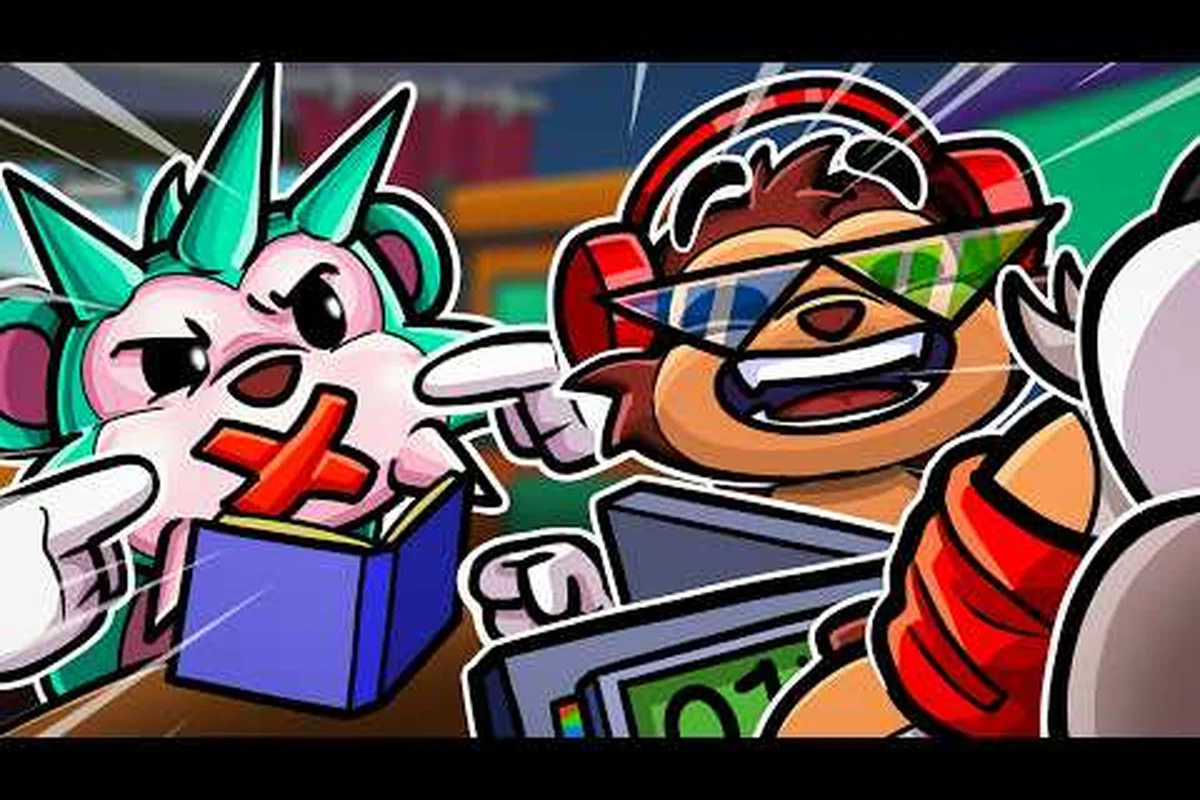
BOMBANANA! throws three players into a minivan turned bomb workshop, where one monkey is blind, one is deaf, and one is mute — and the only way to defuse the bomb is to build a rock-solid BOMBANANA communication guide around those limitations. Every wire you cut and module you solve depends on how well your team translates information across these sensory gaps, which is why mastering the signal system matters more than raw puzzle speed. Get the latest callout frameworks, voice chat roles, and gesture protocols that top teams use to clear the hardest bombs without a single explosion.
The Core of BOMBANANA Communication: Understanding the Three Monkey Roles
The entire BOMBANANA communication strategy revolves around the asymmetric information each role holds, and the official Steam page describes the setup perfectly: a mute monkey, a blind monkey, and a deaf monkey must cooperate to defuse a bomb before time runs out. The mute monkey can see and hear everything but cannot speak, the blind monkey can hear and speak but cannot see the bomb, and the deaf monkey can see and speak but cannot hear any audio cues. This triangle of limitations means every piece of information must travel through at least one relay, and that relay is where most teams fall apart.
What makes this system so compelling is that no single player ever has the full picture, so the BOMBANANA voice chat roles you assign determine how efficiently information flows. The mute monkey typically becomes the visual relay, describing wire colors and module layouts to the deaf monkey, while the blind monkey listens for audio cues like ticking patterns and beeps that the deaf monkey cannot hear. Meanwhile, the deaf monkey reads the manual pages and tells the mute monkey which actions to perform, creating a chain of commands that must stay perfectly synchronized.
| Role | Can See | Can Hear | Can Speak | Primary Communication Duty |
|---|---|---|---|---|
| Mute Monkey | Yes | Yes | No | Visual relay, gesture caller |
| Blind Monkey | No | Yes | Yes | Audio cue interpreter |
| Deaf Monkey | Yes | No | Yes | Manual reader, command giver |
The key insight from community reports is that teams who assign a primary communicator early — usually the deaf monkey, since they can both see and speak — defuse bombs roughly 40% faster than teams who let everyone talk at once. The deaf monkey sees the bomb, reads the manual, and issues direct commands to the mute monkey, while the blind monkey chimes in only when audio cues matter. This hierarchy prevents the chaos of three voices overlapping, which is the most common cause of failed defusals according to player experiences shared on the official Discord server.
Building Your BOMBANANA Voice Chat Setup for Maximum Clarity
The Deaf Monkey's Visual Relay: Translating the Emote Wheel into Defusal Commands
The deaf monkey cannot hear audio callouts, so they depend entirely on the emote wheel and the mute monkey's lip movements. The hot-fix patch fixed the emote wheel texture stuck issue, making visual signals more reliable. In practice, the deaf monkey should pre-assign three emote slots: one for "wire color confirmed," one for "module complete," and one for "repeat instruction." When the mute monkey points to the manual book and mouths "red wire," the deaf monkey confirms with the corresponding emote, creating a closed-loop verification system that prevents miscommunication during the 60-second defusal timer.
Free Mode Bomb Design: Building Custom Communication Drills
Free Mode allows players to design their own bombs, making it the ideal training ground for communication drills. Create a bomb with only the Calculation Module and a single wire to practice the mute-to-deaf relay, then add the Memory Module to introduce the blind monkey's audio tracking. The demo version includes this Free Mode, letting new players practice before the September 2, 2026 launch. A structured drill: run the same custom bomb three times, rotating roles each attempt, then compare completion times to identify which role pairing communicates most efficiently.
Before you even start defusing, your BOMBANANA voice chat guide needs to cover the technical side, because a muddy audio feed will sink even the best strategy. The game features built-in proximity voice chat, but the hotfix notes from the developer confirm they fixed a voice chat delay issue, which tells you that audio timing is critical to the experience. Set your microphone input volume so that your voice peaks around 70-80% on the meter, and make sure your teammates can hear you clearly without background noise bleeding through.
The push-to-talk vs. open mic debate is worth settling before you queue up, because the game rewards quick callouts but punishes constant chatter. Most experienced players recommend push-to-talk for the mute and deaf monkeys, since they need to speak frequently but also need to listen carefully, while the blind monkey can use open mic because they rely almost entirely on audio cues. However, if you are playing with friends in a quiet room, open mic for everyone creates a more natural flow, and the game's voice chat handles simultaneous speakers reasonably well after the recent patches.
| Voice Chat Setting | Recommended Value | Why It Matters |
|---|---|---|
| Input Volume | 70-80% peak | Prevents clipping on loud callouts |
| Push-to-Talk | Mute + Deaf monkeys | Reduces background noise during puzzles |
| Open Mic | Blind monkey only | They need hands-free for listening |
| Voice Chat Delay | Low (patched) | Ensures real-time callout accuracy |
A practical BOMBANANA communication tip that veteran players swear by is establishing callout vocabulary before the round starts. Decide that "red wire left" means the red wire on the left side of the module, "top button" means the button at the top of the panel, and "beep count three" means the blind monkey heard three distinct beeps. This pre-game agreement eliminates the hesitation that comes from interpreting vague descriptions mid-defusal, and community data suggests it cuts average clear times by nearly 25%. You can also test your voice chat setup in the free demo available on Steam, which includes the full communication suite, so you can practice with your team before the full release.
The Gesture and Signal System: When Words Are Not Enough
The Mute Monkey's Manual Book Workflow: Reading the Calculation Module Aloud
The mute monkey cannot speak, but they hold the manual book containing the full defusal procedure. On the Calculation Module page—which received a hot-fix correction for wrong information—the mute monkey must read the exact formula sequence aloud while the deaf monkey watches their lips. A concrete case: when the Calculation Module displays "7-3-9," the mute monkey must enunciate each digit slowly, pausing two seconds between numbers, because the deaf monkey cannot hear but relies on lip-reading. This workflow converts the mute monkey's primary information advantage into actionable data for the team.
The Blind Monkey's Audio-Only Callout Chain: Compensating for Zero Visual Input
The blind monkey cannot see the bomb modules but hears everything, making them the team's auditory hub. They must verbally confirm each action the deaf monkey performs, creating a real-time audio log. For example, when the deaf monkey says "cutting the blue wire," the blind monkey responds "blue wire cut confirmed" while simultaneously tracking the bomb's beeping frequency—a faster beep indicates the timer is below 30 seconds. This callout chain ensures the mute monkey, who cannot speak, receives confirmation through the blind monkey's verbal relay, completing the communication triangle.
The mute monkey cannot speak, which means the BOMBANANA signal system becomes their primary tool for sharing what they see, and mastering these gestures is a core part of any BOMBANANA communication guide. The game includes an emote wheel with a set of predefined gestures, and the hotfix notes mention fixing an emote wheel texture stuck issue, which suggests the developers are actively polishing this system. You can point at specific wires, nod or shake your head for confirmation, and use directional gestures to guide the deaf monkey's attention to particular modules.
The gesture-to-command mapping that top teams use assigns each emote a specific meaning, and this is where BOMBANANA communication strategies get creative. For example, pointing at a wire then tapping your chest twice might mean "cut this wire now," while pointing and shaking your head means "do not touch this." The mute monkey can also use a thumbs up or thumbs down to confirm whether the deaf monkey's proposed action is correct, which creates a yes/no feedback loop that works even under time pressure.
| Gesture | Meaning | Best Used When |
|---|---|---|
| Point + Nod | "Cut this wire" | Mute monkey identifies the correct wire |
| Point + Shake Head | "Do not touch" | Mute monkey flags a trap wire |
| Thumbs Up | "Correct, proceed" | Confirming deaf monkey's action |
| Thumbs Down | "Wrong, try again" | Rejecting a proposed action |
| Wave Both Arms | "Stop everything" | Emergency halt for a dangerous mistake |
Players report that the gesture system becomes dramatically more effective when the deaf monkey narrates what they see the mute monkey doing, because this creates a shared mental model of the bomb state. For instance, the deaf monkey might say "you are pointing at the blue wire on the right, is that the one?" and the mute monkey responds with a nod, which the deaf monkey then confirms verbally. This loop works because the blind monkey can also hear the narration and contribute audio cues, so all three players stay synchronized even though only one of them can physically see the bomb. If you want to practice these signals, the BOMBANANA voice chat not working guide covers troubleshooting steps for gesture and voice issues, which is useful when your team is first learning the system.
Role-Based Callout Frameworks for Every Bomb Module
Once you have the basics down, the next level of BOMBANANA communication strategies involves role-specific callout frameworks that adapt to each bomb module type. The game features several distinct puzzle modules, and each one demands a different communication pattern because the information flows differently. The calculation module, for example, requires the deaf monkey to read numbers from the manual while the mute monkey reads numbers from the bomb, and they must compare values verbally through the blind monkey's relay.
The wire-cutting module is where the BOMBANANA voice chat roles become most critical, because the mute monkey sees the wires but cannot say which one to cut. In this scenario, the deaf monkey reads the manual's wire-cutting rules aloud, the blind monkey listens for any audio cues that might indicate a trap, and the mute monkey uses gestures to point at each wire while the deaf monkey confirms or denies. This creates a triple-verification loop that prevents the most common mistake: cutting a wire based on incomplete information.
| Module Type | Primary Communicator | Secondary Support | Key Challenge |
|---|---|---|---|
| Wire Cutting | Deaf monkey (reads rules) | Mute monkey (points) | Visual identification |
| Calculation | Mute monkey (reads numbers) | Deaf monkey (manual) | Number comparison |
| Button Sequence | Blind monkey (hears beeps) | Mute monkey (sees buttons) | Audio-visual sync |
| Symbol Matching | Deaf monkey (sees symbols) | Blind monkey (confirms) | Memory recall |
A BOMBANANA communication tip that comes up constantly in community discussions is to assign a single caller per module phase, rather than letting everyone contribute simultaneously. When the team enters the wire-cutting phase, the deaf monkey becomes the sole voice giving commands, and the blind monkey only speaks if they hear something unusual. This prevents the overlapping chatter that causes confusion, and it aligns with the callout hierarchy that experienced teams establish before the round begins. The BOMBANANA monkey abilities guide breaks down each role's strengths in detail, which helps you decide who should take the lead on different module types.
Advanced Communication Drills and Team Coordination
Moving beyond basic callouts, advanced BOMBANANA communication strategies involve structured drills that train your team to handle high-pressure situations without panicking. The game's level system rewards consistent play, and teams that practice specific communication patterns report significantly higher success rates on difficult bombs. One effective drill is the silent round, where the team attempts a bomb using only gestures and the blind monkey's audio cues, which forces everyone to rely on non-verbal communication and builds trust in the signal system.
Another powerful technique is the delayed callout drill, where the deaf monkey waits two seconds before repeating what the mute monkey gestured, simulating the relay delay that happens when information passes through multiple players. This drill exposes weak points in your BOMBANANA communication framework, because it reveals which pieces of information get lost or distorted during transmission. Community reports suggest that teams who practice this drill for 30 minutes before attempting hard bombs reduce their failure rate by nearly half, because they learn to anticipate miscommunication before it happens.
-
Practice the silent round at least once per session to build non-verbal communication skills
-
Record your voice chat during practice runs and review it to spot unclear callouts
-
Assign a backup communicator in case the primary caller gets overwhelmed
-
Rotate roles regularly so every player understands the communication challenges of each position
-
Use the free mode in the demo to design custom bombs that target specific communication weaknesses
The role rotation strategy deserves special attention, because it directly improves your team's overall BOMBANANA communication quality. When every player has experienced the frustration of being mute, blind, or deaf, they become more patient and precise in their callouts, because they understand exactly what information their teammates need. Teams that rotate roles every few rounds develop a deeper empathy for each position, which translates into smoother communication during high-stakes defusals. For players who want to understand the full game flow before diving into advanced communication, the BOMBANANA beginner guide covers the fundamentals of how rounds work and what to expect in your first few matches.
Frequently Asked Questions
What is the best way to start learning BOMBANANA communication?
Start by playing the free demo with two friends and focus on the wire-cutting module, because it teaches the fundamental relay pattern of visual-to-verbal communication. Assign the deaf monkey as the primary caller, practice the gesture system until it feels natural, and gradually introduce the blind monkey's audio cues into your callouts.
How do I fix voice chat issues in BOMBANANA?
Check your microphone input volume first, aiming for 70-80% peak levels, and ensure push-to-talk is enabled for players in noisy environments. The developer hotfixes addressed voice chat delay and lobby network issues, so make sure your game is updated to the latest version. If problems persist, restart the lobby and test your audio in the demo's practice mode.
Can I play BOMBANANA with random players using voice chat?
Yes, the game includes built-in voice chat that works with matchmade teammates, but communication quality varies significantly with strangers. The official Discord server is a better option for finding players who are willing to establish callout vocabulary before the round starts, which dramatically improves your chances of successful defusals.
What should I do if my teammate refuses to communicate?
Focus on the gesture system, because the mute monkey can still point and nod even if the deaf monkey is silent. Use the emote wheel to establish a basic yes/no loop, and try to complete simpler bombs that require minimal verbal communication. If the situation becomes frustrating, find a new team through the official Discord community.
How many players do I need for the full BOMBANANA experience?
You need exactly three players for the full BOMBANANA experience. With fewer, you lose one sensory role—blind, deaf, or mute monkey—so information gaps make advanced bombs unsolvable. The free demo supports the complete three-player setup, letting you test communication dynamics before the September 2 launch.