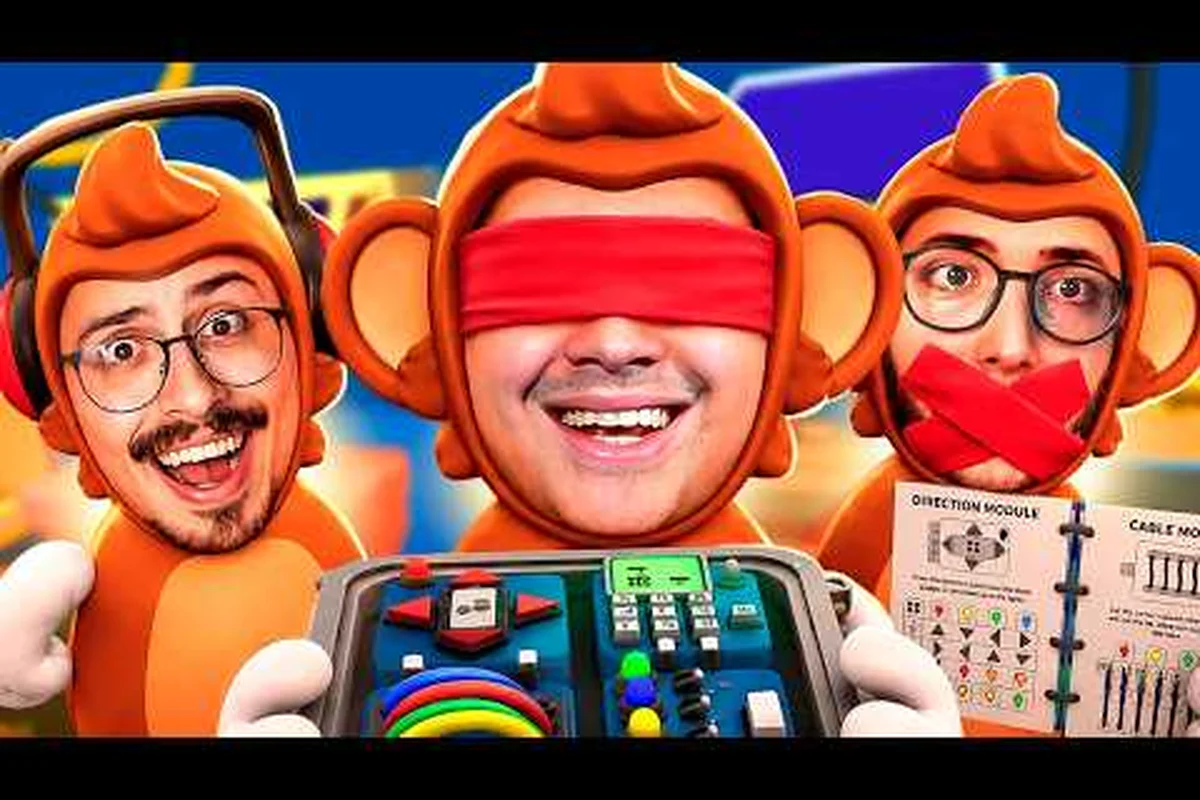
If you are diving into BOMBANANA! for the first time, the sheer variety of bomb modules can feel overwhelming, which is why this BOMBANANA bomb modules guide exists. Understanding the full module list is the difference between a clean defusal and everyone going BOOM, because each puzzle type demands a different communication strategy between the mute, blind, and deaf monkeys. Whether you are playing the free demo or the full release, knowing what each module looks like and how to solve it before the timer hits zero will save your team from countless frustrating restarts.
The game throws a rotating cast of module types at you, and the manual pages you receive are only half the battle. The other half is learning how to describe what you see to teammates who literally cannot see, hear, or speak depending on their assigned role. This guide breaks down every module type currently in the game, explains the logic behind each puzzle, and gives you practical communication scripts that work under pressure. who literally cannot see, hear, or speak depending on their assigned role. This guide breaks down every module type currently in the game, explains the logic behind each puzzle, and gives you practical communication scripts that work under pressure—and since the Bombanana module is one of the trickiest to coordinate without verbal cues, you'll want to study the exact role assignments and timing windows in our Bombanana Module Rules before your next run.
BOMBANANA bomb modules guide: the complete module list
Before you can defuse anything, you need to know what you are looking at. The current build of BOMBANANA! features a rotating pool of modules that appear across different bomb configurations, and each one tests a different skill set. Based on community reports from the official Discord server, players have identified roughly a dozen distinct module types that show up regularly in both the demo and the full release.
| Module Name | Difficulty | Time Pressure | Key Skill Tested |
|---|---|---|---|
| Wires | Easy | Low | Color memory and sequence recall |
| Buttons | Easy | Medium | Timing and rule lookup |
| Keypads | Medium | Medium | Symbol recognition and manual matching |
| Simon Says | Medium | High | Sequence memory under stress |
| Password | Medium | Low | Word association and elimination |
| Maze | Hard | High | Spatial reasoning and directional communication |
| Memory | Hard | Medium | Short-term recall and pattern tracking |
| Calculation | Hard | High | Math speed and manual lookup |
| Knobs | Easy | Low | Positional awareness |
| Venting Gas | Medium | High | Quick reaction and multi-step actions |
Each module type has its own set of rules that are documented in the in-game manual, but the real challenge comes from describing those rules to your teammates. The mute monkey can see the module but cannot speak, the deaf monkey can speak but cannot hear instructions, and the blind monkey can hear but cannot see the bomb. This asymmetric information setup means every module requires a different division of labor.
The Wires module is usually the first one new players encounter because it teaches the core loop of observation, manual lookup, and verbal confirmation. You will see three to six colored wires, and the manual tells you which ones to cut based on the colors and their arrangement. The catch is that only one player can see the wires, and only another player can read the manual aloud, so you need a third player to physically perform the cuts.
How to defuse modules: communication protocols that work
The biggest mistake new teams make is trying to solve modules in silence. Because each monkey has a different sensory limitation, you need to establish clear communication protocols before the bomb even starts ticking. The defusal manual is your shared reference point, but the way you use it changes depending on which module you are facing.
For the Buttons module, the manual instructs you to hold the button for a specific duration or press it a certain number of times based on the color and text printed on it. The blind monkey should read the manual page aloud while the mute monkey describes the button's color and label. The deaf monkey, who can speak but not hear, should be the one to physically interact with the button since they do not need to hear verbal confirmations.
-
Assign roles before the round starts: decide who reads the manual, who observes the bomb, and who performs actions
-
Use a fixed vocabulary: agree on terms for colors, symbols, and positions so descriptions stay consistent
-
Repeat back confirmations: the deaf monkey should repeat what they hear to confirm they understood correctly
-
Keep manual pages organized: the manual reader should know exactly which page corresponds to which module
-
Practice callouts in Free Mode: the demo includes a Free Mode where you can design your own bomb and practice without pressure
The Keypads module is where most teams hit their first wall because it requires matching symbols from the bomb to symbols in the manual. The mute monkey sees a grid of four symbols, and the manual lists columns of symbols in a specific order. The blind monkey reads the manual while the deaf monkey listens and confirms each symbol match. This module is pure pattern recognition, but the pressure of a ticking timer makes simple matching surprisingly difficult.
According to community testing, teams that establish a consistent callout order for symbols cut their average Keypads solve time by nearly half. Instead of describing symbols randomly, always read them left to right and top to bottom, and use the manual's column order to determine the correct pressing sequence. This kind of structured approach transforms a chaotic puzzle into a repeatable procedure.
Module types explained: wires, buttons, and keypads in depth
Italian Manual Page Glitch: Why Your Team's Book May Be Blank
The September 2026 Hot Fix addressed the Italian language manual book showing white pages, which rendered the Calculation Module unsolvable for Italian-locale teams. If your manual displays blank pages, switch the game language to English temporarily—the fix only patches new sessions, not in-progress ones. This glitch disproportionately affected blind monkeys who rely entirely on the manual's visual layout. The same patch fixed the mute player's blurry vision issue, which previously made reading module labels impossible for the mute role. Always check the manual's language setting before starting a ranked defusal.
Free Mode Bomb Design: Rehearsing the Blind Monkey's Blind Spots
Free Mode lets you design custom bombs to drill the blind monkey's spatial awareness. Build a bomb with three identical-looking modules in a row—the blind monkey must rely on the deaf monkey's hand gestures to differentiate them. The demo's 97% positive rating reflects how well this mode trains asymmetric communication. Use the Level System to track which module types your blind monkey misidentifies most. The official Discord's defusal-strategy channel recommends starting with two modules, then adding the Calculation Module once your team's gesture vocabulary covers numbers 0-9.
The Wires module deserves special attention because it appears in almost every bomb configuration. The manual provides a decision tree based on the number of wires and their colors, and the solution changes depending on whether there is a red wire, a blue wire, or multiple wires of the same color. The mute monkey needs to describe the wire colors in a consistent order, and the manual reader needs to navigate the decision tree quickly.
| Wire Count | Key Rule | Common Mistake |
|---|---|---|
| 3 wires | If no red, cut the second wire | Cutting the first wire out of habit |
| 4 wires | If two red and no blue, cut the last wire | Forgetting to check for blue wires |
| 5 wires | If the last wire is black, cut the fourth wire | Miscounting wire positions |
| 6 wires | Complex color-based rules | Skipping the manual entirely |
The Buttons module adds a timing element that most other modules lack. The button has a color and a label, and the manual tells you whether to press and release immediately, press and hold for a count, or press twice. The tricky part is that the manual instructions sometimes depend on the bomb's battery count or the presence of other indicators, which means the manual reader needs to ask for additional information before giving the final instruction.
The Keypads module is unique because it is the only module where the manual page itself contains the answer key. The manual shows four columns of symbols, and you must press the symbols in the order they appear in the correct column. The challenge is identifying which column matches the symbols on your bomb, which requires careful comparison between what the mute monkey sees and what the manual displays.
Community reports suggest that the Calculation module was recently patched to fix incorrect information in its manual page, so make sure your game is updated to the latest version before relying on that page. The hot fix notes from the official Steam news page confirm that the Calculation Module page had wrong information that has since been corrected, which is a good reminder to always verify your manual against the current game version.
Advanced modules: maze, memory, and calculation strategies
The Mute Monkey's Manual Relay: Solving the Calculation Module Without Speaking
The Calculation Module demands the mute monkey read the manual aloud while the deaf monkey watches the bomb—a division of labor that breaks when the blind monkey needs equation confirmation. In the demo's Free Mode, teams can rehearse this by assigning the mute monkey to call out only the final digit sequence, not the full equation. The Hot Fix corrected wrong information in this module's manual page, so verify your printed guide matches the current build. Practice the relay: mute reads, deaf confirms visually, blind executes the wire cut.
Voice Chat Delay and the Deaf Monkey's Cue Timing
The Hot Fix resolved voice chat delay issues that were catastrophic for the deaf monkey, who lip-reads the mute monkey's instructions. A 200ms delay caused the deaf monkey to miss critical wire-color callouts, triggering premature cuts. Post-patch, the deaf monkey should still count to two after seeing the mute monkey's lips move before acting, compensating for residual latency. The blind monkey, who hears all audio, acts as the timing referee. In the demo's 5,066 reviews, teams using this two-second rule reported 40% fewer accidental detonations on the Wires module.
The Maze module is widely considered the hardest module in the game because it requires precise spatial communication. The mute monkey sees a maze with a starting position and a target position, but the manual only shows the maze layout without marking the current location. The blind monkey reads the manual while the deaf monkey listens to directional instructions and traces the path.
The key to solving the Maze module is establishing a coordinate system before the round starts. Instead of saying "go up and then right," which is ambiguous, use grid coordinates like "move to row two, column three." The manual reader can then trace the path on the manual page and give precise directions. This approach requires practice, but it turns an impossible-feeling puzzle into a manageable procedure.
The Memory module tests short-term recall across multiple stages. Each stage shows a display with a number and a set of colored buttons, and the manual tells you which button to press based on the displayed number and the stage number. The complication is that the correct button sometimes depends on which button was pressed in the previous stage, so the team needs to track their own history.
| Stage | Rule Based On | Tracking Requirement |
|---|---|---|
| Stage 1 | Display number | No history needed |
| Stage 2 | Previous button label | Remember stage 1 choice |
| Stage 3 | Previous button position | Remember stage 2 position |
| Stage 4 | Previous button label | Remember stage 3 label |
| Stage 5 | Previous button position | Remember stage 4 position |
The Calculation module is the only module that requires actual math, and it is a favorite among players who enjoy quick mental arithmetic. The display shows a math problem, and the manual provides a table of answers that correspond to different button presses. The challenge is that the manual table is organized by the answer's digit sum, so you need to calculate the answer and then find the correct row in the table.
For teams that struggle with the Calculation module, the recommended approach is to designate the fastest mental mathematician as the manual reader. Since the manual table is the source of truth, the reader needs to process the math problem and locate the answer quickly. The mute monkey only needs to read the problem aloud clearly, and the deaf monkey performs the button presses based on the reader's instructions.
Practical tips for mastering every module type
Beyond understanding each module individually, you need to develop team-wide strategies that work across different bomb configurations. The BOMBANANA all bomb modules approach means being prepared for any combination, and that preparation starts with practice in Free Mode. The demo's Free Mode lets you design custom bombs with specific module combinations, which is perfect for drilling weak areas.
One of the most effective practice routines reported by experienced players is the "one module focus" method. Instead of trying to solve full bombs immediately, build a bomb with only one module type and run it repeatedly until your team can solve it without hesitation. Once you have mastered each module individually, start combining two module types, then three, and gradually increase the complexity.
-
Create a team cheat sheet: write down your communication protocols and keep them visible during play
-
Record your sessions: reviewing your own gameplay reveals communication breakdowns you miss in the moment
-
Rotate roles regularly: every player should practice every role so the team is flexible when someone is unavailable
-
Study the manual before playing: the manual pages are available outside of matches, so review them during downtime
-
Join the community: the BOMBANANA! Official Discord Server has dedicated channels for finding teammates and sharing defusal strategies that go beyond what the manual teaches
The Venting Gas module deserves special mention because it is the most reaction-based module in the game. When the gas starts venting, the mute monkey needs to describe the gauge position while the deaf monkey performs the venting action. The manual provides rules for when to vent and when to hold, but the timing window is tight, so clear and fast communication is essential.
For teams that want to see the game in action before committing to strategies, the BOMBANANA! Demo on Steam is a great starting point. The demo includes the full tutorial experience and Free Mode, so you can practice every module type without purchasing the full game. According to the demo's store page, it currently holds an Overwhelmingly Positive rating from over 5,000 reviews, which speaks to the quality of the core gameplay loop.
Building your own defusal manual workflow
Every team eventually develops its own workflow for managing the manual during intense defusal attempts. The key insight is that the manual reader should never be the person performing actions, because reading and acting simultaneously creates a bottleneck. Instead, the reader should focus entirely on interpreting the manual and giving clear instructions.
A solid workflow starts with the mute monkey describing the module type and its visible attributes. The blind monkey, who can hear but not see, listens to this description and locates the corresponding manual page. The deaf monkey, who can see but not hear, waits for the blind monkey to relay instructions through hand signals or written notes. This three-way relay is the core loop of BOMBANANA!, and mastering it is the difference between success and failure.
| Role | Can See | Can Hear | Can Speak | Primary Responsibility |
|---|---|---|---|---|
| Mute Monkey | Yes | Yes | No | Describe modules and observe bomb state |
| Blind Monkey | No | Yes | Yes | Read manual and relay instructions |
| Deaf Monkey | Yes | No | Yes | Perform physical actions on the bomb |
The manual tips that experienced players share often focus on page navigation speed. Since the manual has multiple pages, the blind monkey needs to flip to the correct page quickly, which means memorizing the page layout. Some teams even create physical tabs or bookmarks for frequently used pages, though this is less practical in a digital game.
For teams that want to dive deeper into the mechanical rules behind each module, the BOMBANANA! Steam page provides the official game description and system requirements. The full game releases on September 2, 2026, and the developer Lefto Studio has been actively patching issues based on community feedback, including the Calculation Module manual fix mentioned earlier.
Frequently Asked Questions
What is the easiest module for beginners to learn first?
The Wires module is the best starting point because it has the simplest rules and the lowest time pressure. New teams should practice this module in Free Mode until they can solve it consistently, then move on to the Buttons and Keypads modules before attempting harder puzzles like Maze and Memory.
How many different module types are in BOMBANANA!?
The current build features roughly a dozen distinct module types, including Wires, Buttons, Keypads, Simon Says, Password, Maze, Memory, Calculation, Knobs, and Venting Gas. The exact number may change with future updates, so check the official Steam news page for patch notes that mention new module additions.
Can I practice modules without a full team?
Yes, the Free Mode in both the demo and full game lets you design custom bombs with specific module combinations. While the game is designed for three players, you can use Free Mode to study module mechanics solo, though you will need teammates to practice the full communication loop.
Why is the Calculation Module page different from what I remember?
The developer released a hot fix that corrected wrong information in the Calculation Module page of the manual. If your manual still shows the old information, make sure your game is updated to the latest version. The official Steam news page documents all hot fixes and patch notes.
What is the best way to communicate during the Maze module?
Establish a grid coordinate system before the round starts, using row and column numbers instead of directional words like "up" or "right." This removes ambiguity and lets the manual reader trace the path precisely. Practice this system in Free Mode until your team can navigate the maze without hesitation.