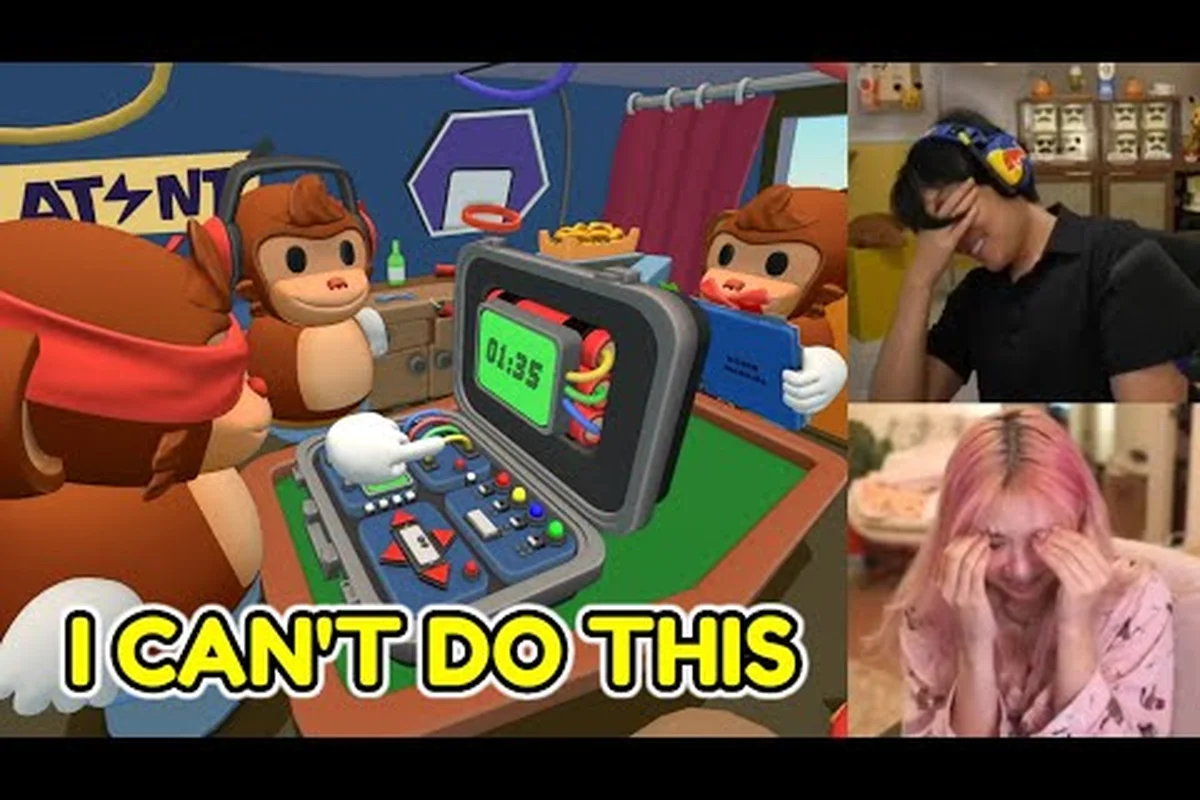
Understanding BOMBANANA level progression is the key to surviving the explosive chaos that Lefto Studio and publisher TARK have crafted. Because the game forces three monkeys with asymmetric roles—blind, deaf, and mute—to defuse bombs under extreme time pressure, knowing how to advance through the stages directly impacts your squad's survival rate. Mastering this system early ensures you spend less time wiping on basic modules and more time tackling the complex puzzles waiting in the late game.
How BOMBANANA Level Progression Works
The core of BOMBANANA level progression revolves around a linear unlock system tied to successful defusals rather than a traditional experience point grind. According to the official BOMBANANA! store page on Steam, the game features a dedicated level system that gates increasingly complex bomb modules behind your team's demonstrated competency. When your squad successfully defuses a bomb, the next tier of complexity becomes available in the level select menu.
This design philosophy means that BOMBANANA level progression is inherently skill-based rather than time-based. You cannot simply grind early, easy bombs for hours to unlock late-game content. Instead, the game evaluates your team's ability to communicate effectively under pressure, handle multi-step module solutions, and manage the chaotic environment of your minivan-turned-mobile-bomb-workshop. Each successful defusal serves as proof that your team is ready for the next tier of challenges.
The Role of Asymmetric Communication
Because one player is blind, another is deaf, and the third is mute, the communication loop itself is the primary barrier to BOMBANANA level progression. The blind monkey can see the manual but cannot hear the timer or teammates; the deaf monkey can hear nothing but can see the bomb; the mute monkey can hear everything but cannot speak. This forced asymmetry means that advancing through levels requires mastering a specific communication relay.
| Communication Role | Can See | Can Hear | Can Speak | Primary Responsibility |
|---|---|---|---|---|
| Blind Monkey | Manual only | No | Yes | Reading instructions aloud |
| Deaf Monkey | Bomb modules | No | No | Executing physical defusal steps |
| Mute Monkey | Bomb modules | Yes | No | Relaying timer and audio cues |
The table above illustrates why BOMBANANA level difficulty scales so aggressively. As new modules introduce audio-only cues or text-only instructions, the communication chain becomes longer and more fragile. Players who understand this dynamic can check out our BOMBANANA levels guide for a detailed breakdown of how each stage tests these communication pathways in different ways.
BOMBANANA Level Difficulty Scaling Explained
BOMBANANA level difficulty is not a simple linear increase but rather a multi-dimensional scaling system that introduces new mechanics in layers. Early levels typically feature one or two simple modules with generous timers, allowing teams to establish their communication shorthand. As you progress, the game adds simultaneous module countdowns, deceptive visual cues, and intentionally misleading documentation that tests your team's trust and verification protocols.
According to community data from the official BOMBANANA! Discord server, player drop-off rates spike significantly around the mid-tier levels where simultaneous module countdowns first appear. This difficulty wall exists because teams that relied on sequential problem-solving suddenly must parallelize their communication, which often leads to critical information being missed. Overcoming this wall is a core part of the BOMBANANA difficulty guide, as it fundamentally changes how the three monkeys must interact.
Module Complexity Tiers
The BOMBANANA level progression system categorizes bomb modules into distinct complexity tiers. Understanding these tiers helps teams anticipate what new mechanics will appear as they unlock harder stages. Each tier introduces a new layer of cognitive load that the three-monkey communication chain must absorb.
| Module Tier | Complexity Features | Typical Timer | Introduced In Level |
|---|---|---|---|
| Tier 1: Basic | Simple wire cutting, button sequences | 120+ seconds | Levels 1-3 |
| Tier 2: Intermediate | Conditional logic, color codes | 90 seconds | Levels 4-6 |
| Tier 3: Advanced | Simultaneous countdowns, audio cues | 60 seconds | Levels 7-9 |
| Tier 4: Expert | Misleading manuals, hidden compartments | 45 seconds | Levels 10+ |
The table above shows how BOMBANANA level difficulty compounds over time. Tier 1 modules teach the fundamental communication loop, while Tier 2 introduces conditional logic that requires the blind monkey to interpret complex rules. Tier 3 is where most teams struggle, as the deaf monkey must execute steps while the mute monkey frantically relays shrinking timer values. By Tier 4, the game actively tries to deceive your team with false instructions and hidden compartments, demanding a high level of trust and verification.
How to Progress Through BOMBANANA Levels
If you are wondering BOMBANANA how to progress efficiently, the answer lies in developing standardized communication protocols rather than raw puzzle-solving speed. Teams that create consistent shorthand terms for common module elements—such as calling the red wire "cherry" or the blue button "ocean"—process instructions significantly faster than teams that describe everything from scratch each time. This shorthand becomes the backbone of your BOMBANANA level up guide.
Establishing a Communication Framework
A strong communication framework is essential for BOMBANANA level progression because the asymmetric roles create natural bottlenecks. The blind monkey reads the manual, the mute monkey relays information between the blind and deaf monkeys, and the deaf monkey executes the physical defusal. Without a standardized framework, critical details get lost in translation, especially when the timer is ticking down.
| Communication Step | Blind Monkey Action | Mute Monkey Action | Deaf Monkey Action |
|---|---|---|---|
| 1. Identify | Reads module name | Points to module | Waits for instructions |
| 2. Translate | Simplifies manual text | Relays simplified text | Listens to mute monkey |
| 3. Execute | Confirms next step | Watches execution | Performs physical action |
| 4. Verify | Reads next condition | Confirms completion | Shows module state |
Following a structured framework like the one above dramatically improves your team's consistency. Each monkey knows exactly what to do at each step, reducing the cognitive load and allowing the team to focus on solving the puzzle rather than figuring out how to communicate. This structured approach is how top-tier teams manage to defuse even the most complex Tier 4 modules under tight timers.
Practicing on Replayable Stages
One of the most effective strategies for BOMBANANA how to progress is to replay earlier stages deliberately to practice new communication techniques. Because the game features a level select menu after stages are unlocked, teams can return to earlier bombs to test shorthand terms without the pressure of unfamiliar module types. This practice builds muscle memory for the communication chain, which pays dividends when you encounter similar modules in later, harder levels.
Replaying stages also helps teams identify where their communication breaks down under pressure. If a team consistently fails on a specific module type, replaying an easier version of that module allows them to debug their communication flow without the added stress of a 45-second timer. For more details on which stages are best for practice, our BOMBANANA unlock order resource breaks down the optimal sequence for tackling levels.
Unlocking Harder Levels: Requirements and Tips
BOMBANANA unlock harder levels mechanics are straightforward but punishing. The primary requirement is a successful defusal of the current level's bomb, but the game also tracks your team's consistency across multiple attempts. If your team struggles with a particular level, the game does not lock you out, but the next level will be significantly harder if you have not mastered the current tier's mechanics.
Key Requirements for Advancement
The BOMBANANA level progression system uses a soft-gate mechanism rather than a hard lock. This means that while you only need one successful defusal to unlock the next level, the game's difficulty curve assumes you have mastered the previous tier's mechanics. Skipping practice and brute-forcing your way through a level often results in hitting a hard wall a few stages later.
| Advancement Stage | Unlock Requirement | Recommended Practice | Risk of Skipping |
|---|---|---|---|
| Early Game | Complete tutorial | 2-3 replays per level | Missing basic shorthand |
| Mid Game | Defuse Tier 2 bomb | Master conditional logic | Communication breakdown |
| Late Game | Defuse Tier 3 bomb | Parallel module handling | Timer exhaustion |
| End Game | Defuse Tier 4 bomb | Full team coordination | Total team wipe |
The table above outlines the soft-gate structure of BOMBANANA level progression. The risk of skipping practice is not just failing the next level but developing bad communication habits that compound over time. Teams that rush through early levels without establishing solid shorthand often find themselves unable to coordinate on Tier 3 modules, where parallel execution is required. Taking the time to practice on each tier before advancing is the single most effective way to ensure smooth progression.
Advanced Strategies for BOMBANANA Level Up
Once your team has a solid communication framework and understands the module tiers, the next step in the BOMBANANA level up guide is optimizing your execution speed. Advanced teams do not just solve modules correctly—they solve them efficiently, minimizing wasted actions and reducing the time between receiving instructions and executing them. This efficiency is what separates teams that barely survive from teams that defuse bombs with time to spare.
Optimizing the Information Relay
The information relay between the three monkeys is the most common bottleneck in BOMBANANA level progression. The blind monkey often reads too much information at once, overwhelming the mute monkey, who then struggles to relay it to the deaf monkey. Advanced teams solve this by breaking down instructions into discrete, actionable chunks that can be relayed in sequence.
| Inefficient Relay | Efficient Relay | Time Saved |
|---|---|---|
| "Cut the third wire from the left, the blue one" | "Cut wire three, blue" | 2-3 seconds |
| "Press the button when the light turns green" | "Press on green" | 1-2 seconds |
| "The password is apple, banana, cherry, date" | "Password: A-B-C-D" | 3-4 seconds |
| "Turn the dial to the number between 5 and 7" | "Dial to six" | 2 seconds |
The table above demonstrates how optimizing the information relay can save precious seconds on the timer. These savings compound across multiple modules, giving your team a larger margin for error when dealing with complex Tier 3 and Tier 4 bombs. The key is for the blind monkey to actively filter and compress information before speaking, rather than reading the manual verbatim.
Handling Simultaneous Module Countdowns
Simultaneous module countdowns are the most feared mechanic in BOMBANANA level difficulty. When two or more modules are counting down at the same time, the team must split their attention and coordinate parallel execution. The deaf monkey often has to switch between modules rapidly, while the mute monkey must relay timer updates for both modules simultaneously. This scenario is where most teams fail, but it is also where the most dramatic improvements can be made.
Advanced teams handle simultaneous countdowns by assigning clear roles for each module. The mute monkey focuses on relaying the timer for the most urgent module, while the blind monkey prepares instructions for the second module in advance. When the first module is defused, the team immediately pivots to the second module with instructions already prepared. This seamless transition requires practice, but it is the only reliable way to handle Tier 3 and Tier 4 simultaneous countdowns.
For teams looking to master these advanced strategies, understanding the BOMBANANA level requirements for each tier can help you anticipate when simultaneous countdowns will appear, giving your team time to prepare.
BOMBANANA Difficulty Guide: Late-Game Challenges
The late-game challenges in BOMBANANA represent the pinnacle of the game's design philosophy. According to player reports from the BOMBANANA! Discord community, the final tiers introduce mechanics that actively try to exploit common communication habits your team has developed. For example, if your team has grown accustomed to the blind monkey reading instructions in a specific order, late-game modules may present instructions in a different format that requires re-interpretation.
Deceptive Documentation and Hidden Compartments
One of the most frustrating but rewarding mechanics in late-game BOMBANANA level progression is deceptive documentation. The manual, which the blind monkey relies on entirely, may contain intentionally misleading instructions or conditional clauses that are easy to miss under time pressure. Hidden compartments add another layer of complexity, as the deaf monkey may need to physically interact with the bomb in unexpected ways to reveal additional modules.
| Late-Game Mechanic | Communication Challenge | Counter-Strategy |
|---|---|---|
| Deceptive Manuals | Blind monkey reads false info | Cross-verify with module state |
| Hidden Compartments | Deaf monkey misses modules | Systematic physical checks |
| Audio-Only Cues | Deaf monkey cannot hear them | Mute monkey relays audio |
| Text-Only Cues | Blind monkey cannot see them | Deaf monkey reads text |
The table above summarizes the four main late-game mechanics and their counter-strategies. Each mechanic targets a specific weakness in the three-monkey communication chain, forcing teams to adapt their established protocols. Deceptive manuals require the blind monkey to actively question what they are reading, while hidden compartments demand that the deaf monkey performs systematic physical checks rather than assuming the bomb's surface is all there is. Audio-only and text-only cues further strain the communication chain by removing information from one monkey's sensory domain entirely.
Maintaining Team Morale Under Pressure
Late-game BOMBANANA level difficulty is designed to test not just communication but also team morale. When a bomb explodes after a 10-minute attempt because of a single misread instruction, frustration can set in quickly. Maintaining a positive team dynamic is critical for long-term progression, as tilted teams communicate less effectively and make more mistakes. The best teams treat every explosion as a learning opportunity, identifying the specific communication breakdown that caused the failure and adjusting their protocols accordingly.
Community data suggests that teams who take short breaks between failed attempts progress faster than teams who immediately retry. A brief pause allows the blind monkey to re-read the manual without time pressure, the mute monkey to process what went wrong in the relay, and the deaf monkey to reset their execution mindset. This structured approach to failure is what separates teams that conquer the late game from those that quit in frustration.
Frequently Asked Questions
How does BOMBANANA level progression work?
BOMBANANA level progression is based on successful defusals rather than experience points. When your three-monkey squad defuses a bomb, the next level unlocks automatically in the level select menu. The game uses a soft-gate system, meaning while you only need one clear to advance, skipping practice on earlier tiers makes later levels significantly harder.
What is the fastest way to unlock harder levels?
The fastest way to unlock harder levels is to establish a standardized communication shorthand with your team. Teams that use consistent, short terms for colors, numbers, and actions process instructions faster and defuse bombs more reliably. Replaying earlier levels to practice this shorthand before advancing is strongly recommended by experienced players.
How does BOMBANANA level difficulty scale?
BOMBANANA level difficulty scales across four module tiers, introducing new mechanics like conditional logic, simultaneous countdowns, and deceptive documentation. Early levels feature generous timers and single modules, while late-game levels combine multiple complex modules with tight timers and misleading instructions that actively exploit your team's established communication habits.
Can I skip levels in BOMBANANA?
No, you cannot skip levels in BOMBANANA. The progression system requires you to defuse each bomb in sequence to unlock the next stage. However, once a level is unlocked, you can replay it at any time from the level select menu, which is useful for practicing new communication techniques without the pressure of unfamiliar module types.
How many players are needed for BOMBANANA level progression?
BOMBANANA requires exactly three players for level progression — one blind monkey, one deaf monkey, and one mute monkey. The asymmetric communication roles are hardwired into every puzzle module and difficulty-scaling tier, so duos or solo players cannot unlock harder levels or advance through the level system at all.