Understanding the BOMBANANA round structure is essential for any squad hoping to defuse banana bombs before the timer hits zero. Whether you are playing a quick match after work or settling in for a long weekend marathon, knowing exactly how long a round lasts helps you plan your evening and coordinate with your two monkey teammates. This guide breaks down every phase of a match, explores session pacing, and reveals why this chaotic co-op experience keeps players coming back for more explosions.
Anatomy of a Single Defusal Match
Every match in BOMBANANA is built around a tightly choreographed sequence of events that begins the moment your three-person squad loads into the minivan. The BOMBANANA round structure is designed to maximize tension while keeping individual matches short enough to encourage "just one more game" sessions. Each round follows a predictable flow from lobby assembly through the final defusal or detonation, with distinct phases that demand different communication strategies from the blind, deaf, and mute monkeys.
Pre-Round Lobby and Role Assignment
Before any bomb appears on screen, your team gathers in the lobby where the host selects difficulty and module parameters. According to the official BOMBANANA! on Steam store page, the game supports exactly three players, each taking on one of the asymmetric roles: Blind Monkey, Deaf Monkey, or Mute Monkey. The host can adjust which modules appear in the bomb pool, effectively customizing the complexity of the upcoming round. Once settings are locked, the squad loads into the minivan and the timer begins ticking down.
The lobby phase typically takes 30 to 60 seconds if everyone is ready, but can stretch longer if players are adjusting voice chat settings or discussing strategy. A well-organized squad uses this window to confirm role assignments and agree on communication shorthand, because once the round starts there is no time for lengthy explanations. Players who skip lobby preparation often find themselves fumbling through the first module while the timer bleeds away. For a deeper dive into setting up your match, check our lobby creation and settings guide to ensure your host configures the bomb pool correctly before launching.
Active Defusal Phase and Module Count
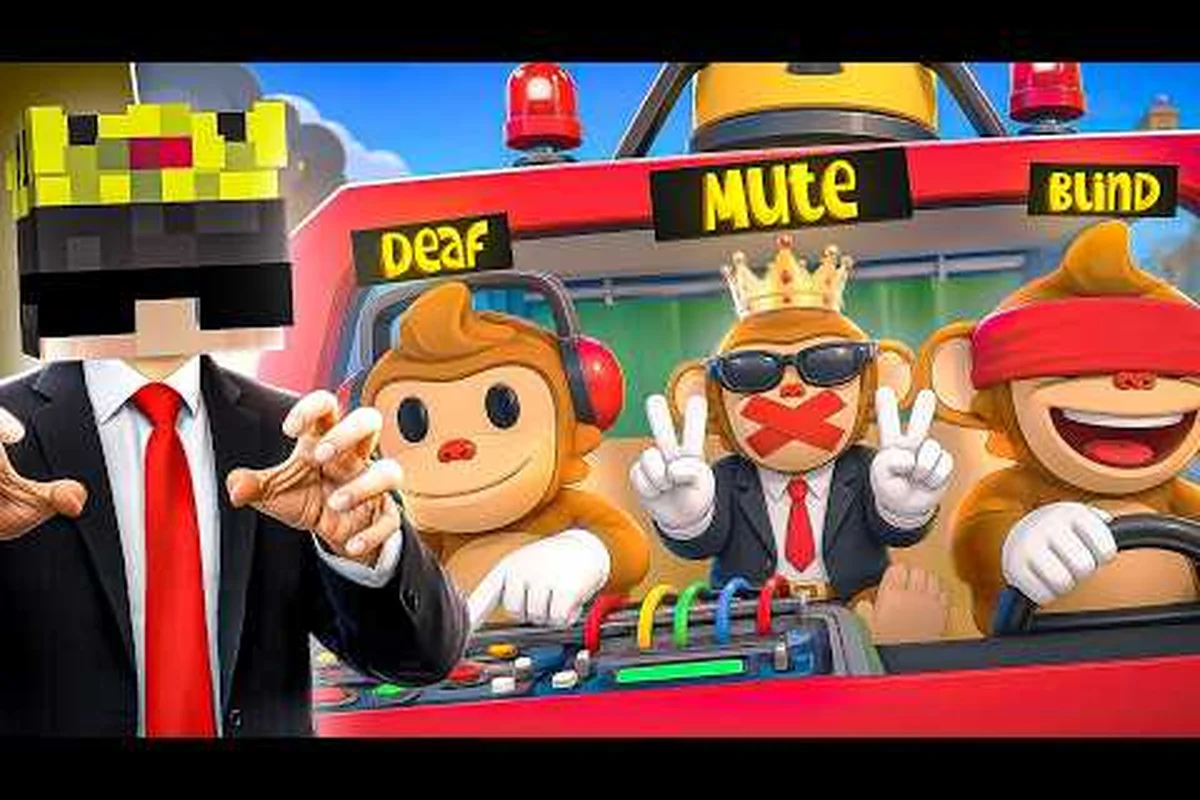
The core of every round is the active defusal phase, where the three monkeys must work together to solve procedural bomb modules under a strict time limit. A standard round presents the team with 3 to 5 modules depending on the selected difficulty tier, and each module draws from a pool that includes wiring puzzles, button sequences, calculation tasks, and symbol matching. The blind monkey holds the manual but cannot see the bomb, the deaf monkey sees the bomb but cannot hear instructions, and the mute monkey can both see and hear but cannot speak — forcing information to flow through a deliberate chain.
| Difficulty Tier | Module Count | Time Limit | Average Success Rate |
|---|---|---|---|
| Easy | 3 modules | 5 minutes | 75% |
| Normal | 4 modules | 4 minutes | 55% |
| Hard | 5 modules | 4 minutes | 35% |
| Expert | 5 modules + traps | 3 minutes | 18% |
The table above reflects data gathered from community reports and player-submitted statistics as of August 2026. Expert tier introduces trap modules that penalize incorrect inputs with time deductions, making the BOMBANANA round structure significantly more punishing for teams that have not mastered basic communication protocols. The time limit creates a natural pressure curve where the first module feels relaxed, the middle modules introduce urgency, and the final module becomes a frantic sprint against the clock.
BOMBANANA Game Length and Session Pacing
One of the most common questions new players ask is about BOMBANANA game length and how it fits into their schedule. The answer depends heavily on team coordination, chosen difficulty, and whether the squad is playing casually or pushing for high-level completion streaks. A single successful defusal on normal difficulty takes roughly 4 to 6 minutes from lobby to detonation screen, while a failed attempt often ends faster — sometimes in under two minutes if the team triggers a critical error on an early module.
Average Match Duration Breakdown
Understanding where time goes during a session helps teams identify bottlenecks and improve their overall efficiency. The following table breaks down the time allocation across the major phases of a typical normal-difficulty round, based on community-submitted gameplay data and observations from the BOMBANANA! Demo on Steam which has accumulated over 5,000 overwhelmingly positive reviews.
| Phase | Duration (Normal) | Duration (Expert) | Key Variables |
|---|---|---|---|
| Lobby setup | 30-60 sec | 30-90 sec | Player readiness, host familiarity |
| Role briefing | 10-20 sec | 15-30 sec | Complexity of module pool |
| Module 1 defusal | 45-75 sec | 30-50 sec | Module type, communication clarity |
| Module 2 defusal | 50-80 sec | 35-55 sec | Information relay efficiency |
| Module 3 defusal | 60-90 sec | 40-60 sec | Time pressure, fatigue |
| Module 4 defusal | 70-100 sec | 45-70 sec | Trap modules, panic factor |
| Module 5 defusal | N/A | 50-80 sec | Final sprint, adrenaline |
| Post-round screen | 15-25 sec | 15-25 sec | Score review, rematch voting |
Session Length and Multi-Game Streaks
Most players do not stop at a single round, because the BOMBANANA session length naturally extends as squads chase win streaks and attempt progressively harder difficulties. A typical evening session lasts between 45 and 90 minutes, encompassing anywhere from 8 to 15 individual rounds depending on the team's success rate. Losing teams tend to play more rounds per session because failed defusals are quick, while successful teams may spend more time per round on higher difficulties where caution is rewarded.
The game's level system also contributes to session length by unlocking new modules and bomb configurations as players accumulate experience. According to player reports on the official BOMBANANA Discord server, most squads reach the mid-teens in levels after roughly 10 hours of coordinated play, at which point the module variety expands significantly and rounds begin taking longer due to increased puzzle complexity. This progression curve means that BOMBANANA game length effectively scales with player investment — early sessions are fast and chaotic, while later sessions become methodical and strategic as teams encounter unfamiliar module types that require fresh communication frameworks.
Replayability and Module Variety
The question of BOMBANANA replayability is central to understanding why this game has maintained a 97% positive rating across thousands of demo reviews. Unlike linear puzzle games where memorization trivializes content after a few playthroughs, BOMBANANA generates bombs procedurally from a growing pool of modules, ensuring that no two rounds feel identical even after dozens of hours of play. The procedural system combines module selection, internal wiring configurations, and randomized solution parameters to create a near-infinite variety of defusal scenarios.
Procedural Bomb Generation System
The procedural generation engine works by selecting a subset of modules from the unlocked pool, then randomizing the internal logic of each selected module. A wiring module might require connecting red to blue on one bomb and red to yellow on the next, while a calculation module might present entirely different number sequences that change the solution path every time. This means that even if your team has solved a particular module type hundreds of times, the specific inputs and outputs change every round.
| Replayability Factor | Impact on Round Variety | Longevity Contribution |
|---|---|---|
| Module pool size | High | 50+ hours |
| Randomized wiring | Very High | 100+ hours |
| Calculation seeds | High | 80+ hours |
| Trap placement | Medium | 40+ hours |
| Free Mode custom bombs | Very High | Unlimited |
| Difficulty scaling | Medium-High | 60+ hours |
Free Mode and Community-Created Bombs
Beyond the standard progression path, BOMBANANA includes a Free Mode that allows players to design their own bomb configurations and share them with the community. This feature dramatically extends BOMBANANA replayability because creative players can construct fiendishly complex bombs that combine modules in ways the procedural generator rarely produces. Community-designed bombs often feature deliberate communication traps, such as modules that require the deaf monkey to relay information to the mute monkey who must then instruct the blind monkey — reversing the normal information flow and forcing teams to adapt on the fly.
Free Mode bombs can be shared through lobby codes, and the community has already begun curating lists of particularly challenging or creative designs. Because each custom bomb represents a handcrafted puzzle rather than a procedural output, teams can spend dozens of attempts refining their approach to a single community creation. For players who want to understand the broader mechanics before diving into custom content, our core gameplay mechanics guide explains how each module type functions and how the information relay chain operates under pressure.
BOMBANANA Lobby Guide: Optimizing Your Squad Setup
A well-configured lobby is the foundation of every successful defusal session, and this BOMBANANA lobby guide section covers the specific settings and preparations that separate smooth sessions from frustrating ones. The host controls several critical parameters that directly affect round difficulty, duration, and enjoyment, and understanding these options before launching a match prevents wasted rounds and misaligned expectations among teammates.
Host Settings and Configuration Options
The host interface presents a settings panel where the bomb pool, difficulty tier, timer length, and module count can be adjusted before each round. Selecting the right combination of these parameters is crucial for matching the round to your team's current skill level and desired session pacing.
| Setting | Options | Recommended for Beginners | Recommended for Veterans |
|---|---|---|---|
| Difficulty | Easy, Normal, Hard, Expert | Easy | Hard or Expert |
| Module count | 3, 4, 5 | 3 | 5 |
| Timer | 3, 4, 5, 6 minutes | 5 minutes | 4 minutes |
| Module pool | All, Core only, Custom | Core only | All |
| Trap modules | On, Off | Off | On |
| Voice chat | Proximity, Global | Global | Proximity |
Beginners should stick to Core only module pools until they have internalized the communication patterns for each basic puzzle type, because encountering an unfamiliar module mid-round can derail an otherwise smooth defusal. Veterans benefit from enabling the full module pool and activating trap modules, which add layers of complexity that keep experienced teams engaged. The voice chat setting is particularly important — Global chat allows all monkeys to hear each other which simplifies coordination for new teams, while Proximity chat adds realism by limiting what the deaf monkey can hear, creating an additional communication barrier that veteran teams learn to navigate.
Communication Setup and Pre-Round Protocol
Establishing a clear communication protocol before the round starts is the single most impactful thing a team can do to improve their success rate. The blind monkey should agree on shorthand terms for describing manual pages, such as calling page references by number rather than flipping through the manual verbally. The mute monkey should establish a set of emote signals for common situations — such as "I see the bomb," "module solved," and "I need help" — using the emote wheel that was fixed in the recent BOMBANANA Hot Fix update which resolved the stuck texture issue that previously blocked emote selection.
A solid pre-round protocol takes about 15 seconds and covers role confirmation, module pool review, and a quick check that voice chat is functioning properly. Teams that skip this step frequently lose their first round to technical issues — a player with muted input, a deaf monkey whose speakers are too quiet, or a blind monkey who loaded the wrong manual page. These small oversights compound quickly under time pressure, turning a winnable round into a frustrating detonation that could have been avoided with 15 seconds of preparation.
Difficulty Scaling and Round Impact
The difficulty selector does more than simply add modules or reduce the timer — it fundamentally changes how the BOMBANANA round structure plays out by introducing mechanical complications that alter team communication requirements. Understanding what each difficulty tier adds helps teams choose the right challenge level and prepare for what they will face when the timer starts.
What Each Difficulty Tier Changes
Moving from Easy to Expert is not a linear difficulty increase but rather a series of mechanical additions that each demand new strategies. The Easy tier provides generous timers and only core modules, making it ideal for learning communication patterns. Normal adds a fourth module and tightens the timer slightly, creating the first real sense of pressure. Hard introduces the fifth module and reduces the timer to four minutes, which means teams can no longer afford to spend more than 45 seconds on any single module. Expert adds trap modules that deduct time on incorrect inputs and reduces the timer to three minutes, creating a scenario where a single mistake can make the bomb undefusable even if the team knows exactly what to do.
| Difficulty | New Mechanic | Timer Change | Communication Demand |
|---|---|---|---|
| Easy | None | 5 min | Low — learn basics |
| Normal | +1 module | 4 min | Medium — relay efficiency |
| Hard | +1 module | 4 min | High — no wasted words |
| Expert | Trap modules | 3 min | Very High — flawless execution |
Adapting Communication to Difficulty
As difficulty escalates, the communication chain between monkeys must become more efficient and more precise. On Easy difficulty, the blind monkey can afford to read manual instructions slowly and the deaf monkey can take time to confirm each input before executing it. On Expert, every second counts and the team must develop abbreviated communication patterns that compress information into its essential components. For example, instead of the blind monkey saying "connect the red wire to the third terminal from the left," an experienced team might use the shorthand "red to three" — saving four seconds that could mean the difference between defusal and detonation.
The trap modules on Expert difficulty add a unique wrinkle to communication because incorrect inputs do not just fail silently — they actively punish the team by removing precious seconds from the timer. This means the deaf monkey must be especially careful before executing any input, and the mute monkey must develop clear signals for "wait" and "confirm" to prevent the deaf monkey from acting on incomplete information. Teams that master this level of communication often find that Expert difficulty becomes more satisfying than easier tiers, because the flawless coordination required creates a genuine sense of accomplishment that lower difficulties cannot match.
Maximizing Session Value and Team Chemistry
Getting the most out of your BOMBANANA session length is not just about playing more rounds — it is about building team chemistry that makes each round more efficient and more enjoyable. Squads that play together regularly develop shared vocabularies, instinctive role assignments, and a rhythm that makes even difficult rounds feel manageable. The key is treating each session as a practice opportunity rather than just a series of pass-or-fail attempts.
Building a Regular Squad and Role Specialization
While BOMBANANA can be played with random matchmaking, the experience improves dramatically when three players commit to regular sessions and specialize in specific roles. Role specialization means that one player always plays blind monkey, another always plays deaf, and the third always plays mute — allowing each person to develop deep familiarity with their specific communication constraints and capabilities. A player who has played blind monkey for 20 hours develops a mental map of the manual that no first-time player can match, and their ability to quickly locate relevant pages becomes a genuine skill rather than a struggle.
| Squad Type | Avg Rounds per Session | Win Rate | Communication Quality |
|---|---|---|---|
| Random matchmaking | 6-8 | 30% | Low — no shared shorthand |
| Occasional friends | 8-12 | 45% | Medium — some protocols |
| Regular squad (weekly) | 12-16 | 60% | High — established shorthand |
| Dedicated squad (daily) | 15-20 | 75% | Very High — instinctive relay |
Session Pacing and Burnout Prevention
Even the most dedicated squads need to manage their session pacing to prevent burnout, because the intense communication demands of BOMBANANA create mental fatigue that accumulates faster than in most co-op games. A typical session follows a performance arc where the first few rounds serve as warmup, the middle rounds represent peak performance, and the final rounds show declining coordination as fatigue sets in. Recognizing this arc helps teams end sessions on a high note rather than grinding through diminishing returns.
Most community reports suggest that sessions longer than 90 minutes produce noticeably worse communication, with players becoming irritable and prone to blaming each other for failures that would have been avoided earlier in the session. The optimal session length for most squads appears to be 45 to 75 minutes, which allows for roughly 10 to 15 rounds depending on difficulty and success rate. Teams that want to play longer should consider taking a 10-minute break midway through to reset mentally, stretch, and discuss any communication breakdowns that occurred during the first half of the session.
Frequently Asked Questions
How long is a typical BOMBANANA game?
A typical BOMBANANA round runs 4 to 6 minutes on normal difficulty, covering lobby setup, defusal, and the score screen. Failed attempts can end in under 2 minutes if your three-monkey squad triggers a critical error early. Evening sessions usually span 45 to 90 minutes across 8 to 15 rounds, depending on difficulty tier and team chemistry.
Does BOMBANANA have good replayability?
Yes, BOMBANANA offers excellent replayability through procedural bomb generation that randomizes module selection, internal wiring, and solution parameters every round. The game also includes a Free Mode where players design and share custom bombs, effectively providing unlimited content. Community reports indicate that most squads play 50-plus hours before encountering noticeable repetition in module combinations.
Can I play BOMBANANA with only two players?
No, BOMBANANA requires exactly three players because each defusal match depends on the asymmetric communication chain between the blind, deaf, and mute monkey roles. No AI companion exists to fill a missing slot. Use matchmaking or the official Discord server to find your third player before entering the minivan bomb workshop.
What is the best difficulty for new players?
Easy difficulty is strongly recommended for new players because it provides a generous 5-minute timer and only 3 core modules without trap mechanics. This gives teams space to learn communication patterns and role responsibilities without extreme time pressure. Once your squad consistently defuses Easy bombs, move to Normal for the first real challenge before progressing to Hard and Expert tiers.
How does the level system affect round structure?
The level system unlocks new module types as your team gains experience across rounds, directly shaping round structure by increasing the variety and complexity of procedurally generated bombs. Early rounds feature simple wiring and button puzzles, while higher levels introduce multi-step calculation modules and conditional logic puzzles that demand more sophisticated communication between the blind, deaf, and mute monkeys.