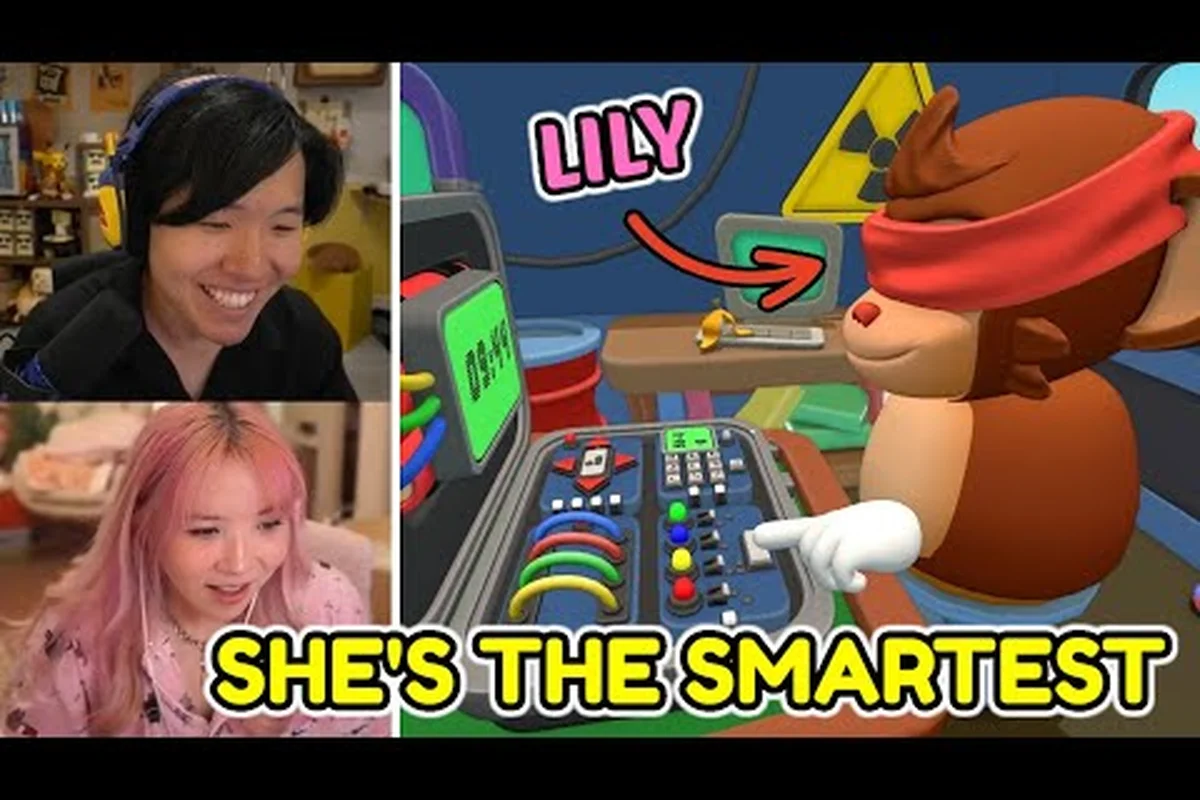
BOMBANANA! monkey abilities are the heart of this chaotic three-player co-op bomb defusal game, and understanding each role's unique skill set is the difference between a clean save and a spectacular explosion. Every match drops you into a minivan-turned-mobile-bomb-workshop with two teammates, where the blind monkey, deaf monkey, and mute monkey each hold only a fragment of the information needed to succeed. Because communication is deliberately broken, your success depends entirely on how well you leverage each monkey's specific strengths while compensating for their critical weaknesses.
The game launched its demo on June 15, 2026, and has already earned an Overwhelmingly Positive rating across more than 5,000 reviews on Steam, which tells you the role system is doing something right. Players quickly discovered that mastering the BOMBANANA monkey abilities requires more than just knowing what each character does—it demands a real strategy for how the three roles interact under pressure. This breakdown covers every ability, the hidden mechanics that aren't obvious at first glance, and the team strategies that top players use to defuse even the nastiest bombs. it demands a real strategy for how the three roles interact under pressure. This breakdown covers every ability, the hidden mechanics that aren't obvious at first glance, and the team strategies that top players use to defuse even the nastiest bombs—and to truly master those defusal windows, you'll want to pair this with the full operational flow in Bombanana How The Game Works, which maps out the exact round-by-round pressure points where those strategies pay off.
BOMBANANA Role Overview: How the Three Monkeys Work Together
The core premise of BOMBANANA! is brutally simple: three players, one bomb, and no reliable way to share what you see. According to the official BOMBANANA! Steam page, the game is designed so that each player only has part of the information, forcing the team to work through the constraints of their assigned monkey. The blind monkey cannot see the bomb's modules, the deaf monkey cannot hear the audio cues, and the mute monkey cannot speak to coordinate the others.
Each role's abilities are asymmetric by design, which means there is no "best" monkey—only the best way to play the monkey you're given. The game's role breakdown creates a triangle of dependency: the blind monkey needs the deaf monkey's hearing, the deaf monkey needs the mute monkey's vision, and the mute monkey needs everyone to interpret their gestures correctly. When this triangle works, defusal becomes a smooth, almost musical process. When it breaks down, you get the hilarious failures that make the game so entertaining to watch.
BOMBANANA role abilities are not just passive limitations—each monkey has active tools that help them contribute despite their disability. The blind monkey has a tactile scanner that reveals module shapes through touch, the deaf monkey has a vibration sensor that translates audio cues into physical feedback, and the mute monkey has a gesture system that can point, nod, and shake their head with exaggerated clarity. Understanding these tools is the foundation of any successful BOMBANANA role strategy.
| Role | Primary Limitation | Active Ability | Best For |
|---|---|---|---|
| Blind Monkey | Cannot see bomb modules | Tactile scanner reveals shapes | Identifying wire colors and module types |
| Deaf Monkey | Cannot hear audio cues | Vibration sensor for sound feedback | Detecting timers and activation sounds |
| Mute Monkey | Cannot speak | Exaggerated gesture system | Directing teammates and confirming actions |
The BOMBANANA role overview also reveals that each monkey has a unique perspective on the bomb itself. The blind monkey sees the timer but not the wires, the deaf monkey sees the wires but not the timer, and the mute monkey sees everything but cannot tell anyone what they're looking at. This information split is the genius of the design—it forces constant, creative communication through the limited channels each role has available.
Blind Monkey Abilities: Tactile Scanning and Module Recognition
The blind monkey's BOMBANANA monkey abilities center on the tactile scanner, a device that lets them "feel" the bomb's modules through a haptic interface. When you activate the scanner, the screen fills with raised-relief outlines of the bomb's components, letting you identify shapes, wire positions, and module types without actually seeing them. This is the most information-dense ability in the game, but it comes with a serious drawback: the scanner takes about two seconds to complete a full sweep, and you cannot move while using it.
Because the blind monkey cannot see colors, they rely on the deaf monkey to describe wire colors and the mute monkey to confirm which module they're touching. The tactile feedback system also lets the blind monkey feel the bomb's vibration patterns, which can indicate whether a wire is live or inert. Experienced players report that the blind monkey's role is essentially that of a "hands-on investigator"—you're the one physically interacting with the bomb while your teammates provide the visual and auditory context you lack.
Tactile Scanner Mechanics
The scanner has three distinct modes that unlock as you progress through the level system, which the demo's feature list confirms includes a progression system. The basic sweep identifies module boundaries, the deep scan reveals internal wire routing, and the emergency pulse gives a one-second burst of full clarity but costs a significant chunk of the defusal timer. Knowing when to use each mode is a core BOMBANANA role strategy, because the emergency pulse can save a run but also cripple your time budget if overused.
| Scanner Mode | Scan Time | Information Gained | Timer Cost |
|---|---|---|---|
| Basic Sweep | 2 seconds | Module boundaries and shapes | None |
| Deep Scan | 4 seconds | Internal wire routing and connections | 5 seconds |
| Emergency Pulse | 1 second | Full module clarity | 15 seconds |
The blind monkey also has a memory assist feature that marks previously scanned modules with a distinct texture, helping you track which parts of the bomb you've already examined. This is particularly useful on complex bombs with multiple identical-looking modules, because it prevents you from wasting time re-scanning the same section. According to community reports from the BOMBANANA! Discord server, the memory assist is widely considered the blind monkey's most underrated tool, since it effectively gives you a mental map of the bomb that persists even when you're not actively scanning.
Blind Monkey Team Coordination
Playing the blind monkey effectively means trusting your teammates completely, because you will often have to act on information you cannot verify yourself. The confirmation loop is the standard technique: you scan a module, describe what you feel to the mute monkey, the mute monkey confirms or corrects your description with gestures, and the deaf monkey verifies that the audio cues match the expected pattern. This loop takes practice, but it becomes second nature after a few sessions.
One of the most important blind monkey tips is to always scan in a consistent pattern, starting from the top-left of the bomb and working clockwise. This creates a shared reference frame that your teammates can rely on, because they know exactly which module you're describing based on your scan order. Players who develop this habit report significantly fewer miscommunications, especially during high-pressure moments when the timer is running low.
Deaf Monkey Abilities: Vibration Sensing and Audio Translation
The deaf monkey's BOMBANANA monkey abilities revolve around the vibration sensor, a wrist-mounted device that translates audio cues into physical pulses. While the deaf monkey cannot hear the bomb's beeps, clicks, and alarms, the sensor converts these sounds into distinct vibration patterns that the player can feel through the controller or keyboard. This creates a fascinating gameplay dynamic where the deaf monkey is actually the only player who can reliably track the bomb's audio state without visual confirmation.
The vibration patterns are surprisingly nuanced: a short buzz indicates a wire being cut, a rhythmic pulse indicates the timer counting down, and a continuous hum indicates that a module has been activated. Learning to distinguish these patterns by feel alone is one of the most challenging but rewarding skills in the game. Veteran players describe the sensation as "learning to hear with your hands," and it opens up a level of situational awareness that the other roles simply cannot match.
Vibration Pattern Recognition
Mastering the deaf monkey's role requires building a mental library of vibration patterns and what they mean. The pattern dictionary below shows the most common signals you'll encounter, though the full game adds several more advanced patterns that the demo doesn't include. According to the demo's overwhelmingly positive reviews, players particularly enjoy the moment when the vibration patterns "click" and they can suddenly read the bomb's audio state as easily as reading a screen.
| Vibration Pattern | Meaning | Urgency Level |
|---|---|---|
| Single short buzz | Wire cut successfully | Low |
| Double buzz | Wire cut failed | High |
| Rhythmic pulse | Timer counting down | Medium |
| Continuous hum | Module activated | Critical |
| Rapid stutter | Bomb about to detonate | Extreme |
The deaf monkey also has a directional hearing aid that, despite the name, works through the vibration sensor to indicate which side of the bomb an audio cue is coming from. This is invaluable for locating the source of a new sound, especially on larger bombs where modules are spread across multiple panels. The directional feedback manifests as a stronger vibration on the left or right side of the sensor, letting you point your teammates toward the relevant module with a simple gesture.
Deaf Monkey Communication Tactics
Because the deaf monkey cannot hear verbal instructions, the mute monkey's gestures become their primary source of information. This creates a unique partnership where the mute monkey must develop clear, unambiguous gestures for common instructions like "cut the red wire," "check the top module," or "the timer is low." The game's gesture system supports this by offering a set of exaggerated, cartoonish movements that are easy to read even in the chaos of a defusal attempt.
The tap code system is an advanced technique that some teams use to communicate numbers quickly. The deaf monkey taps on the mute monkey's shoulder (or the table, if playing on a shared surface) to represent numbers, with a pause between digits. This allows for precise communication of wire numbers, timer values, and module positions without any visual or verbal cues. While the tap code requires practice to use fluently, teams that master it gain a significant advantage in speed and accuracy.
Mute Monkey Abilities: Gesture Commands and Visual Direction
The mute monkey's BOMBANANA monkey abilities are the most visually oriented of the three roles, because the mute monkey can see everything but cannot speak. This makes the mute monkey the de facto director of the team, responsible for interpreting the blind monkey's tactile descriptions and the deaf monkey's vibration signals, then directing everyone toward the correct action. The gesture system is the mute monkey's primary tool, offering a range of movements that can point, confirm, deny, and instruct with varying levels of urgency.
The gesture system includes pointing directions (up, down, left, right, and diagonals), confirmation signals (thumbs up, thumbs down, nodding, head shaking), and action commands (cut, twist, pull, press). Each gesture has a distinct animation that's exaggerated enough to be readable from across the room, which is essential because the mute monkey often needs to direct the blind monkey's hands to the correct wire while the deaf monkey watches for confirmation.
Gesture Command Efficiency
Not all gestures are created equal—some are faster to perform but less precise, while others are slower but more informative. The gesture efficiency table below breaks down the trade-offs, based on community testing reported by players in the BOMBANANA! Discord. Understanding these trade-offs helps mute monkey players choose the right gesture for the situation, balancing speed against clarity.
| Gesture Type | Execution Time | Clarity | Best Use Case |
|---|---|---|---|
| Pointing | 0.5 seconds | Medium | Quick directional guidance |
| Thumbs up/down | 0.8 seconds | High | Confirming or denying actions |
| Action commands | 1.2 seconds | Very High | Directing specific bomb interactions |
| Complex sequences | 2+ seconds | Very High | Multi-step instructions |
The mute monkey also has a highlight ability that temporarily outlines a specific module or wire in bright yellow, visible only to the blind monkey. This is the mute monkey's most powerful tool, because it lets you direct the blind monkey's attention without any ambiguity. The highlight lasts for three seconds and has a five-second cooldown, which means you need to use it strategically rather than spamming it on every module.
Mute Monkey Strategic Direction
The mute monkey's role is fundamentally about information routing—taking the partial information from both teammates and synthesizing it into a clear action plan. This requires strong situational awareness and the ability to think several steps ahead. While the blind monkey is scanning a module, the mute monkey should already be planning which wire to cut based on the deaf monkey's vibration signals, so that the moment the scan completes, the team can act immediately.
One of the most effective mute monkey strategies is to establish a gesture vocabulary before the round starts. Many teams agree on specific gestures for common situations, such as a circular motion meaning "scan this module again" or a tapping gesture meaning "check the timer." According to the BOMBANANA! role strategies shared by experienced players, teams that pre-agree on gesture meanings complete defusals significantly faster than teams that improvise, because they eliminate the hesitation that comes from interpreting unfamiliar signals.
BOMBANANA Role Strategies: Team Coordination and Advanced Tactics
Understanding individual BOMBANANA monkey abilities is only half the battle—the real challenge is coordinating all three roles into a cohesive team. The best teams develop a division of labor where each monkey focuses on their unique strengths while compensating for their teammates' weaknesses. This section covers the advanced strategies that separate successful teams from the ones that go BOOM.
The communication protocol is the foundation of any good team strategy. Most successful teams establish a strict order of operations: the blind monkey scans and describes, the mute monkey interprets and directs, and the deaf monkey verifies and confirms. This creates a predictable flow of information that reduces confusion and speeds up decision-making. Teams that skip this protocol often find themselves talking over each other, with the blind monkey describing a module while the mute monkey is still trying to direct the deaf monkey toward a different part of the bomb.
Role-Specific Strategy Breakdown
Each role has its own set of advanced techniques that experienced players have developed through hundreds of defusal attempts. The BOMBANANA role breakdown below summarizes the key strategies for each monkey, based on community reports and the official Steam page's description of the game's mechanics.
| Role | Primary Strategy | Advanced Technique | Common Mistake |
|---|---|---|---|
| Blind Monkey | Consistent scan patterns | Memory assist tracking | Overusing emergency pulse |
| Deaf Monkey | Vibration pattern library | Tap code communication | Ignoring directional feedback |
| Mute Monkey | Pre-agreed gesture vocabulary | Strategic highlight usage | Highlighting too late |
The blind monkey's advanced strategy focuses on efficient scanning routes that minimize wasted time. Instead of scanning the entire bomb in one pass, experienced blind players scan only the modules that are relevant to the current task, using the deaf monkey's directional feedback to locate the correct section. This targeted approach saves precious seconds that can mean the difference between a successful defusal and a messy explosion.
Advanced Team Tactics
Beyond individual strategies, the best teams develop coordinated routines for common bomb configurations. The two-person scan is a popular technique where the blind monkey and deaf monkey work together to identify a module while the mute monkey watches for any visual cues they might miss. This technique is particularly effective on bombs with multiple similar-looking modules, because it combines the blind monkey's tactile information with the deaf monkey's audio confirmation.
Another advanced tactic is the silent countdown, where the deaf monkey tracks the timer through vibration patterns and communicates the remaining time to the mute monkey through a series of taps. The mute monkey then relays this information to the blind monkey through gestures, creating a communication chain that bypasses the need for verbal communication entirely. Teams that master the silent countdown can defuse bombs with remarkable efficiency, because they never have to pause to check the timer visually.
Practice Drills and Skill Development
Improving at BOMBANANA! requires deliberate practice, and the game's Free Mode—which the demo page confirms lets you design your own bomb—is the perfect training ground. Players recommend starting with simple bombs that have only one or two modules, then gradually increasing complexity as your team's communication improves. The level system also provides a natural progression path, with each level introducing new module types and more complex bomb configurations.
For teams that want to accelerate their improvement, recording and reviewing your defusal attempts is incredibly valuable. Watching your own gameplay reveals communication breakdowns that you don't notice in the heat of the moment, such as the mute monkey giving ambiguous gestures or the blind monkey scanning modules in an inconsistent order. According to the BOMBANANA! demo page, the game's overwhelmingly positive reviews suggest that players who invest time in deliberate practice see dramatic improvements in their defusal success rate.
Frequently Asked Questions
What is the hardest BOMBANANA monkey role to play?
The deaf monkey is generally considered the hardest role because vibration pattern recognition requires significant practice before it becomes intuitive. New players often struggle to distinguish between similar patterns, leading to miscommunication and failed defusals. However, the mute monkey presents a different challenge, requiring strong leadership skills and the ability to think several steps ahead while directing teammates.
How do BOMBANANA monkey abilities change as you level up?
Leveling unlocks new scanner modes for the blind monkey, extra vibration patterns for the deaf monkey, and expanded gesture options for the mute monkey. Higher levels introduce complex bomb modules like the Calculation Module, requiring advanced versions of each ability so you master basics before tackling harder defusals.
Can you switch roles during a BOMBANANA! match?
No, each player is assigned a role at the start of the match and keeps it for the entire defusal attempt. This forces teams to develop strategies that work with their specific role composition. However, the game's matchmaking system allows you to queue for preferred roles, and the Free Mode lets you practice with any role combination you choose.
What is the best strategy for beginners learning BOMBANANA role abilities?
Beginners should focus on mastering one role at a time, starting with the mute monkey since it has the most visual information available. Practice establishing a clear gesture vocabulary with your team before attempting complex bombs. The demo's Free Mode is ideal for this, as it lets you design simple bombs that focus on basic communication rather than advanced mechanics.
How important is voice chat in BOMBANANA!?
Voice chat is important, but it's not the backbone of a winning team. Since the mute monkey can't speak and the deaf monkey can't hear, teams relying on it hit a wall. Use voice only for the blind monkey's module descriptions, and master gesture commands and vibration patterns for everything else.