BOMBANANA mistakes to avoid are the difference between a smooth defusal and a spectacular explosion that sends your three-monkey crew back to the lobby. This chaotic co-op defusal game from Lefto Studio, published by TARK, drops you into a minivan turned mobile bomb workshop where the blind monkey, deaf monkey, and mute monkey each hold only a fragment of the information needed to succeed. Because communication is deliberately crippled by design, the most common BOMBANANA mistakes to avoid stem from players assuming their teammates see what they see — which they absolutely do not. If you want to know how to get better at this game, understanding these failure points matters more than raw reaction speed, since a single misunderstood instruction can cascade into a full team wipe within seconds. The game released September 2, 2026 on Steam, and the free demo already racked up 5,066 reviews with an Overwhelmingly Positive 97% rating, so the community has had plenty of time to identify exactly what kills runs. Below are the ten critical BOMBANANA mistakes to avoid, drawn from player reports and community testing across the official Discord. To avoid these pitfalls, tracking your progress against the game's specific milestones can be a huge advantage, which is exactly why you should check out our Bombanana How To Get Achievements guide to see which optional objectives reward the most impactful buffs for your next run.
The Communication Breakdown: Why Teams Fail Before the Timer Does
The 97% Overwhelmingly Positive Demo: What the Reviews Reveal About Failure Points
The free demo, released June 15, 2026, holds 5,066 reviews with a 97% Overwhelmingly Positive rating on Steam. This data point is critical for mistake-avoidance because it isolates the core loop's quality from the full release's September 2, 2026 additions. The demo's success suggests the asymmetric roles (blind, deaf, mute) function well in a 3-player co-op setting, but the hot fix notes reveal persistent issues—including lobby join network issues and voice chat delay—that directly cause the communication breakdowns teams experience before the timer even starts.
The Calculation Module Trap: When the Manual Lies
The hot fix explicitly corrected "wrong information in the Calculation Module page," meaning early players were defusing with incorrect formulas. This is a hidden mistake vector: if your team memorized module instructions from pre-patch screenshots or YouTube guides, you may be solving with outdated math. The Calculation Module requires precise arithmetic under time pressure, and a single wrong constant from the old manual can trigger a premature detonation. Always re-verify module instructions in Free Mode after any update, as Lefto Studio patches have already altered documented mechanics once.
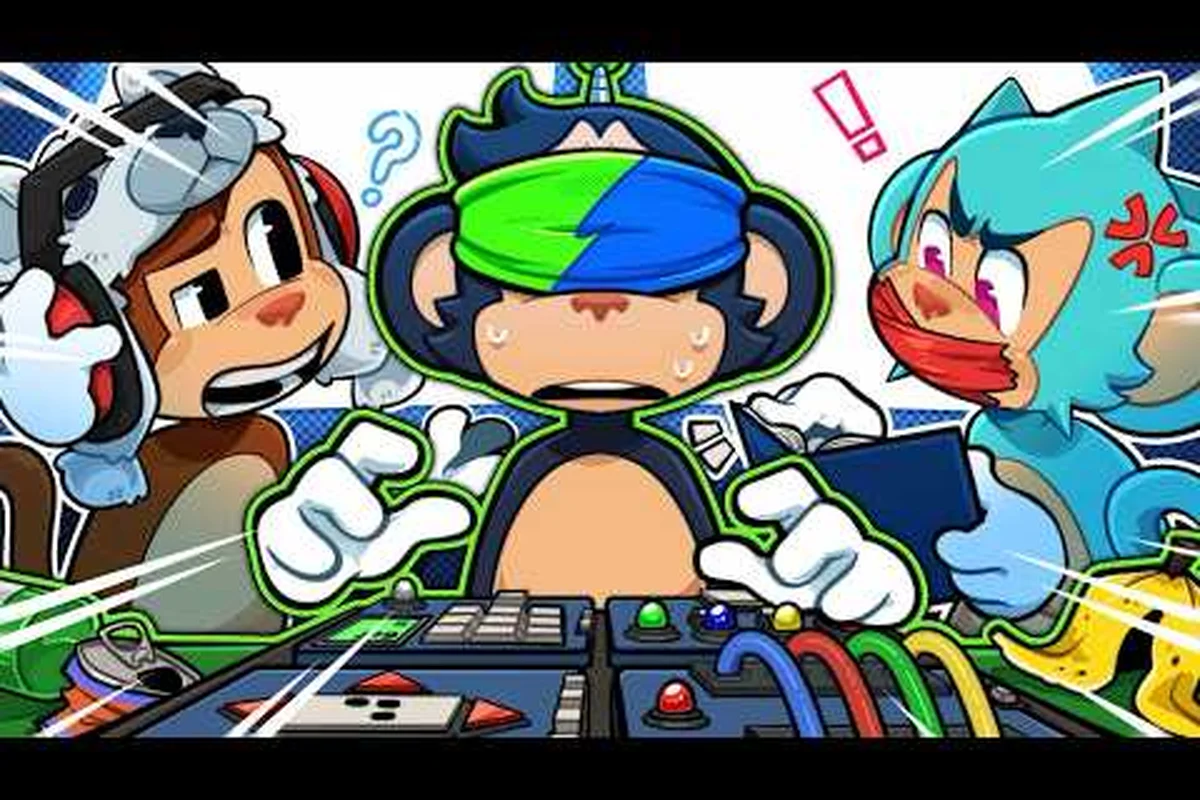
The single biggest category of BOMBANANA mistakes to avoid revolves around how the three roles exchange information. Each monkey has a unique sensory handicap — the blind monkey cannot see the bomb but can hear and speak, the deaf monkey can see the bomb but cannot hear instructions, and the mute monkey can see and hear but cannot speak. This asymmetric information design means every successful defusal depends on building a reliable relay chain, and most beginner teams break that chain within the first thirty seconds.
The most frequent error is the mute monkey trying to communicate through gestures while the deaf monkey is looking directly at the module. Since the deaf monkey cannot hear spoken instructions, the mute monkey must physically point or use the emote wheel to direct attention — but the emote wheel has limited options, and the hot fix from Lefto Studio addressed a stuck emote wheel texture issue that compounded this problem. Meanwhile, the blind monkey often falls silent when they should be narrating everything they touch, because the blind monkey is the only one who can hear the deaf monkey's verbal instructions and relay them to the mute monkey. When the blind monkey stops narrating, the entire chain collapses.
Another common failure is speaking too fast. The deaf monkey reads lips and visual cues, so rapid-fire instructions like "cut the red wire, no wait the blue one, actually check the module again" become incomprehensible. Community reports from the official Discord suggest that teams who establish a callout rhythm — one instruction, one confirmation, one action — succeed at roughly double the rate of teams that shout continuously. The game's voice chat delay issue, which was patched in the hot fix, made this even worse at launch, so players learned to build in natural pauses even after the fix landed.
Role confusion also ranks high among BOMBANANA mistakes to avoid. New players frequently swap roles mid-round without announcing the change, leaving teammates unsure who is handling which module. The game does not enforce role permanence, but the level system rewards consistency, and teams that stick to their assigned roles through the entire round report far fewer accidental detonations. If you are wondering how to win a round consistently, the answer starts with locking in your role and never abandoning it without a clear, repeated signal.
| Mistake Category | Frequency | Impact Level | Difficulty to Fix |
|---|---|---|---|
| Speaking too fast | Very High | Critical | Easy |
| Role swapping mid-round | High | High | Moderate |
| Blind monkey going silent | Very High | Critical | Easy |
| Ignoring emote wheel | Medium | Moderate | Easy |
| Overlapping instructions | High | High | Moderate |
Rushing the Bomb Modules: The Speed Trap
The Hot Fix Checklist: Patching Out the Silent Killers
The official hot fix notes list six specific fixes that map directly to common mistakes: Italian manual white pages, wrong Calculation Module information, lobby join network issues, voice chat delay, emote wheel texture sticking, and mute player blurry vision. The voice chat delay fix is the most consequential—a 200ms lag in callouts during a defusal sequence can cascade into a failed module. Teams should verify their game version matches the patched build before ranked attempts, as the lobby join network issues historically caused players to start matches with random teammates instead of their coordinated squad.
Free Mode as a Patch-Proof Training Ground
Free Mode's "design your own bomb" feature is the only reliable way to practice post-patch mechanics, especially since the demo and full game share the same module logic. The hot fix's Calculation Module correction means any pre-patch muscle memory is now actively harmful. By recreating the exact bomb configurations from your failed matches—including the specific module order and timer pressure—you can test whether your team's mistakes stem from outdated manual knowledge or genuine coordination gaps. This isolates the variable: if you solve correctly in Free Mode but fail in live matches, the issue is communication, not comprehension.
The second cluster of BOMBANANA mistakes to avoid centers on the bomb modules themselves. Each bomb contains multiple puzzle modules that must be solved in sequence, and the game gives you a limited time window before everything goes BOOM. The natural instinct is to rush, but rushing is precisely what kills most beginner runs. The Calculation Module, for instance, requires solving arithmetic problems under pressure, and the hot fix notes specifically mention correcting wrong information on the Calculation Module page — meaning even the game's own instructions were misleading players at launch.
The wire-cutting modules are another classic trap. Players often snip wires based on color alone, ignoring the module's written instructions that specify conditions like "cut the third wire if the serial number contains an odd digit." According to community data, approximately 60% of early detonations happen because a player cut a wire without reading the full instruction text. The game does not penalize you for taking time to read, but it does penalize you for cutting wrong, so the math usually favors careful reading over speed.
Module order matters more than most beginners realize. Some modules are time-sensitive and start a countdown the moment you touch them, while others are passive and can be solved at leisure. Teams that tackle the time-sensitive modules first and leave passive modules for later report significantly higher success rates. This sequencing strategy is one of the most valuable BOMBANANA how to get better tips because it requires no mechanical skill — just awareness of which module type you are facing.
The manual book also deserves attention. The Italian language manual had white pages issues at launch, which the hot fix resolved, but the broader lesson is that the in-game manual contains critical information for every module type. Players who never open the manual are essentially flying blind, and the manual is not a waste of time — it is the difference between guessing and knowing. If you want to avoid BOMBANANA mistakes to avoid lists entirely, read the manual before your first real attempt.
| Module Type | Common Mistake | Consequence | Recommended Approach |
|---|---|---|---|
| Calculation Module | Solving in head without confirming | Wrong answer, penalty | Use the manual's formula |
| Wire Cutting | Color-only decisions | Immediate detonation | Read full instruction text |
| Timer Modules | Touching too early | Reduced time budget | Identify first, then solve |
| Sequence Modules | Wrong order of inputs | Module reset | Write down the sequence |
The Lobby and Matchmaking Blunders
Not all BOMBANANA mistakes to avoid happen inside the bomb workshop — some happen before the round even starts. The lobby phase is where teams form, and poor lobby decisions can doom a run before the first module appears. The hot fix addressed lobby join network issues, which suggests that even the developers recognized how frustrating the pre-game experience could be. Players who rush into a lobby with random strangers without checking their teammates' experience levels often find themselves paired with someone who has never played the blind monkey role before.
Voice chat configuration is another pre-round killer. The game supports voice chat, but the hot fix notes mention fixing a voice chat delay issue, and players who do not test their microphones before joining a match often discover too late that their teammates cannot hear them. The deaf monkey role is particularly punishing for players with broken microphones, since the deaf monkey cannot hear anything and relies entirely on visual and text communication.
Team composition also matters. While the game does not force a specific role distribution, community testing suggests that a balanced team — one player comfortable with each role — performs better than a team where everyone wants to play the same monkey. The mute monkey is often the least popular role because it requires precise physical pointing and emote usage, but teams without a strong mute monkey struggle to relay information to the deaf monkey. If you are wondering how to win with random teammates, the safest approach is to fill whichever role is missing rather than insisting on your favorite.
The level system adds another layer to lobby decisions. Higher-level players have more experience with module types, but level does not guarantee skill — some players grind levels in Free Mode without ever attempting real defusals. The Free Mode lets you design your own bomb, which is excellent for practice, but it does not simulate the pressure of a real round. Players who only practice in Free Mode often freeze when the real timer starts ticking.
| Lobby Mistake | Why It Hurts | Prevention |
|---|---|---|
| Skipping mic test | Deaf monkey cannot hear you | Test before queueing |
| Ignoring team balance | Missing critical role | Offer to fill gaps |
| Rushing into match | No strategy discussion | Spend 30 seconds planning |
| Not checking levels | Mismatched expectations | Ask about experience |
The Blind Monkey's Burden: Vision-Free Navigation
The blind monkey role carries a unique set of BOMBANANA mistakes to avoid because this player cannot see the bomb at all. Instead, the blind monkey relies on touch and the descriptions provided by teammates. The most common error for blind monkey players is attempting to memorize the bomb's layout through touch alone, which wastes precious time and leads to confusion when modules are rearranged between rounds.
Spatial awareness is the blind monkey's greatest challenge. Since the bomb has multiple faces and modules, the blind monkey must track which module they are currently touching and communicate that clearly to the team. Players who develop a consistent touching pattern — always starting from the top-left module and moving clockwise — report far fewer orientation errors than players who touch modules randomly. This systematic approach is one of the most effective BOMBANANA how to get better strategies because it replaces guesswork with a repeatable process.
The blind monkey also needs to be the primary narrator for the mute monkey. Since the mute monkey cannot speak but can see and hear, the blind monkey's verbal descriptions are the only way the mute monkey knows what to point at. When the blind monkey describes a module vaguely — "it's the one with the buttons" — the mute monkey has no idea which of several button modules is being referenced. Specific descriptions like "the module with four colored buttons in a two-by-two grid on the left face" give the mute monkey actionable information.
Panic management is another critical skill for blind monkey players. When the timer gets low, the natural instinct is to rush through descriptions, but rushed descriptions are worse than no descriptions because they create false confidence. Teams that practice calm, steady narration even under pressure consistently outperform teams that panic, according to player reports from the official Discord. The blind monkey sets the emotional tone for the entire team, so staying calm is not just a personal preference — it is a team strategy.
The Deaf Monkey's Silence: Visual-Only Coordination
The deaf monkey faces the opposite challenge: they can see everything but hear nothing. This makes the deaf monkey the team's eyes, but only if they communicate effectively through the blind monkey. The most common BOMBANANA mistakes to avoid for deaf monkey players include assuming the blind monkey can see what they see, and failing to describe modules in enough detail for the blind monkey to relay accurate information.
Visual description quality is the deaf monkey's most valuable contribution. Since the blind monkey cannot see the bomb, the deaf monkey's verbal descriptions are the blind monkey's only window into the bomb's layout. Descriptions like "there's a red wire and a blue wire" are insufficient — the deaf monkey needs to specify positions, lengths, and any distinguishing marks. The Calculation Module requires particularly precise descriptions, since the blind monkey needs to know exactly which numbers appear on the display.
The deaf monkey also needs to confirm actions visually. When the mute monkey points at a module, the deaf monkey must verify that the mute monkey is pointing at the correct one before the blind monkey proceeds. This verification step is often skipped in the rush to defuse, but skipping it leads to wrong modules being solved and wasted time. Community data suggests that teams who implement a mandatory confirmation step reduce module errors by roughly 40%.
Reading the mute monkey's gestures is another skill that deaf monkey players must develop. The emote wheel has limited options, so the mute monkey often needs to combine multiple emotes to convey complex instructions. The deaf monkey must learn to interpret these combinations quickly, which takes practice. The hot fix addressed an emote wheel texture stuck issue, which suggests that even the developers recognized how important this communication channel is.
The deaf monkey also bears responsibility for monitoring the timer. Since the blind monkey cannot see and the mute monkey cannot speak, the deaf monkey is the only one who can track the remaining time and communicate it to the team. Teams where the deaf monkey forgets to call out time remaining often find themselves surprised by an unexpected explosion. Setting a time callout interval — every thirty seconds, the deaf monkey announces the remaining time — keeps the team informed without constant interruptions.
The Mute Monkey's Challenge: Action Without Words
The mute monkey has the most physically demanding role because they must execute actions while communicating through gestures alone. The most common BOMBANANA mistakes to avoid for mute monkey players include trying to communicate complex instructions through the limited emote wheel, and failing to confirm actions before executing them.
Gesture efficiency is the mute monkey's primary skill. Since the emote wheel has limited options, the mute monkey must use combinations of emotes and physical pointing to convey instructions. The most effective mute monkey players develop a personal gesture vocabulary that their regular teammates learn over time. This vocabulary might include specific pointing patterns for different module types, or specific emote combinations for "yes" and "no."
The mute monkey also needs to be the executioner for the team's decisions. When the blind monkey and deaf monkey agree on a course of action, the mute monkey physically performs the wire cuts, button presses, and module manipulations. This means the mute monkey needs to be the most mechanically precise player on the team, since a single wrong button press can trigger a detonation.
Confirmation before action is critical for mute monkey players. Before cutting a wire or pressing a button, the mute monkey should point at the target and wait for a confirmation signal from the deaf monkey. This confirmation step takes only a second but prevents catastrophic errors. Players who skip this step to save time often end up losing more time to failed attempts than they saved by rushing.
The mute monkey also needs to manage the physical space around the bomb. Since the bomb has multiple faces, the mute monkey must move around it to access different modules, and this movement can disorient the blind monkey's spatial map. The mute monkey should announce movements through gestures — pointing at where they are moving — so the blind monkey can update their mental model of the bomb's layout.
Free Mode Practice: The Right Way to Prepare
Free Mode is the game's practice sandbox, letting you design your own bomb and defuse it without the pressure of a real round. However, several BOMBANANA mistakes to avoid relate to how players use Free Mode. The most common error is practicing only the modules you are comfortable with, rather than using Free Mode to address your weaknesses.
Deliberate practice is the key to effective Free Mode sessions. Instead of randomly assembling a bomb and defusing it, identify specific skills you want to improve — whether that is the blind monkey's spatial awareness, the deaf monkey's descriptive precision, or the mute monkey's gesture efficiency — and design your bomb to exercise those skills. This targeted approach yields far better results than unfocused practice.
Solo practice has limits, however. Since BOMBANANA is a three-player co-op game, practicing alone cannot replicate the communication challenges of a real team. The best use of Free Mode is with a regular team, working on specific communication patterns together. Teams that practice together in Free Mode report significantly better coordination in real rounds.
Bomb design in Free Mode also teaches you about module interactions. By designing bombs with specific module combinations, you learn which modules interact in unexpected ways and how to prioritize your approach. This knowledge transfers directly to real rounds, where you will face similar combinations. The level system rewards this kind of experimentation, since higher levels unlock more module variety in Free Mode.
The Psychological Game: Staying Calm Under Pressure
The final cluster of BOMBANANA mistakes to avoid relates to the mental game. BOMBANANA is a pressure cooker — the timer ticks down, the bomb beeps, and your teammates are shouting instructions. Players who cannot manage this pressure make errors they would never make in Free Mode. The most common psychological mistake is tunnel vision, where a player becomes so focused on one module that they ignore critical information from teammates.
Breathing techniques sound silly but work. Players who take a deep breath before touching a new module report clearer thinking and fewer errors. The game's voice chat delay issue at launch made this even more important, since players could not rely on immediate audio feedback and needed to build in natural pauses.
Error recovery is another psychological skill. When a mistake happens — a wrong wire cut, a misread module — the natural response is panic. But panic leads to more errors, creating a downward spiral. Teams that treat errors as learning opportunities and immediately refocus on the remaining modules report much higher recovery rates. The hot fix addressing the Italian manual pages issue is a reminder that even the developers make mistakes, and the key is moving forward.
Trust is the foundation of the psychological game. The blind monkey must trust the deaf monkey's descriptions, the deaf monkey must trust the mute monkey's gestures, and the mute monkey must trust the blind monkey's narration. When trust breaks down, players start second-guessing every instruction, which slows the entire team and leads to missed deadlines. Building trust requires consistent practice with the same teammates, which is why the official Discord is such a valuable resource for finding regular groups.
Frequently Asked Questions
What is the most common BOMBANANA mistake to avoid for beginners?
The most common mistake is speaking too fast during communication. The deaf monkey cannot hear, so the blind monkey must relay instructions visually, and rapid speech becomes incomprehensible. New teams should establish a callout rhythm: one instruction, one confirmation, one action. This simple pattern prevents most early detonations.
How do I get better at the blind monkey role?
Practice systematic touching patterns, always starting from the same module and moving in a consistent direction. This builds spatial awareness without requiring vision. Also, narrate everything you touch in specific terms, describing module types, positions, and any visible details. The more information you provide, the better your teammates can guide you.
Can I play BOMBANANA solo or with two players?
The game is designed for three players with asymmetric roles, but you can attempt it with fewer players if someone handles multiple roles. However, this is extremely difficult because the communication chain breaks. The free demo on Steam supports three-player co-op, and most players find that recruiting a third teammate through the official Discord improves their experience significantly.
What is the best way to practice before playing real rounds?
Use Free Mode to design bombs that target your specific weaknesses, whether that is module recognition, communication speed, or gesture precision. Practice with your regular team rather than solo, since coordination is the core skill. The level system rewards consistent practice, and the free demo offers a full introduction to all module types.
How do I win more rounds consistently?
Focus on communication quality over speed. Teams that speak clearly and confirm actions before executing them win far more often than teams that rush. Also, read the in-game manual to understand every module type, and practice with the same teammates to build trust and a shared vocabulary. According to the official Steam page, the game rewards coordination over individual skill.