Your first BOMBANANA session will feel chaotic, and that is exactly the point. This BOMBANANA first time playing guide exists because the game deliberately hides its core loop behind a wall of panic: three players, three sensory disabilities, one ticking banana bomb. The BOMBANANA essentials you need before your first defusal are simpler than the chaos suggests, and getting them right turns frustration into the best co-op laugh you will have all year.
The game, developed by Lefto Studio and published by TARK, launches September 2, 2026, but a free demo has already racked up over 5,066 reviews with an Overwhelmingly Positive rating at 97% on Steam. That player feedback matters because it tells you the formula works: asymmetric roles, limited communication, and a minivan turned mobile bomb workshop. If you are about to jump in with two friends, the BOMBANANA quick start steps below will save you from the most common first-round disasters. If you are about to jump in with two friends, the BOMBANANA quick start steps below will save you from the most common first-round disasters, and should you find yourselves in a jam where the monkey’s fuse is lit and no one knows who’s defusing, the exact roles and callouts for that chaos are laid out in our Bombanana Blind Monkey What To Do guide.
BOMBANANA first time playing: understanding the three monkey roles
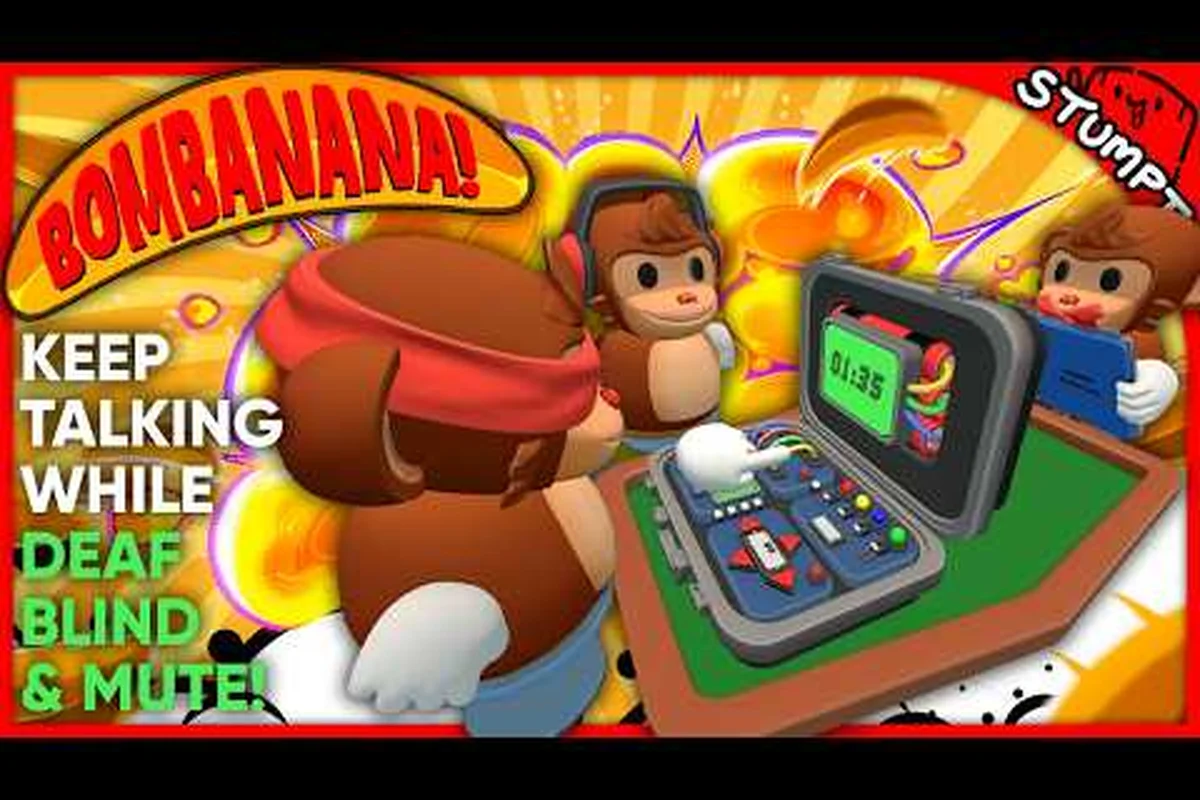
Before you even touch a bomb module, you need to understand that BOMBANANA is not a game where everyone sees the same screen. Each of the three players controls one monkey with a specific sensory limitation, and that limitation defines everything you can and cannot do during a defusal. The official Steam page describes the setup clearly: a mute monkey, a blind monkey, and a deaf monkey must work together to defuse a bomb, or everyone goes BOOM. That asymmetry is the entire game.
The Blind Monkey cannot see the bomb modules at all, which sounds crippling until you realize this player is the only one who can read the manual. The Deaf Monkey can see everything but hears nothing, making them the only player who can physically interact with the bomb without restrictions. The Mute Monkey can see and hear but cannot speak, so they become the relay station between the other two. Understanding these roles is the first BOMBANANA essential because every strategy you build starts from your own limitation.
| Role | Can See | Can Hear | Can Speak | Primary Job |
|---|---|---|---|---|
| Blind Monkey | No | Yes | Yes | Reads the manual aloud |
| Deaf Monkey | Yes | No | Yes | Touches the bomb modules |
| Mute Monkey | Yes | Yes | No | Relays information between both |
The demo has already proven that role clarity matters more than individual skill. Community reports from the demo period consistently show that teams who assign roles before the round starts survive significantly longer than teams who figure it out mid-defusal. Players who treat their limitation as a puzzle rather than a handicap tend to build the strongest communication systems, which is why the BOMBANANA what to do first checklist always starts with role assignment.
Each role also has a distinct learning curve. The Blind Monkey needs to develop spatial memory and trust, because they must guide the Deaf Monkey through modules they cannot see. The Deaf Monkey needs to stay calm under pressure, because they are the only one who can actually interact with the bomb and every mistake is visible to the whole team. The Mute Monkey needs to process information quickly and communicate through gestures, sounds, or typing, which becomes the team's bottleneck when the timer gets tight.
Setting up your communication system before the timer starts
The single biggest mistake new teams make is assuming they can improvise communication once the bomb is live. That approach fails almost immediately because the Mute Monkey cannot speak, the Blind Monkey cannot see what they are describing, and the Deaf Monkey cannot hear the warnings. The BOMBANANA essentials for communication must be established before you ever start a round, and the game gives you a free mode to practice exactly that.
The demo includes a Free Mode where you can design your own bomb, and this is the perfect place to build your communication framework. According to player feedback from the demo period, teams that spend ten minutes in Free Mode before their first real defusal perform dramatically better in their first few rounds. The key is to agree on a vocabulary for common actions before you need it, because mid-defusal is the worst time to invent terminology.
The Mute Monkey communication problem deserves special attention because it is the hardest limitation to work around. Since this player cannot speak, they need a system that works within the game's mechanics. Some teams use physical gestures in real life, which works if you are in the same room. Others use text chat, but that is slow and dangerous under a timer. The most effective approach reported by players is a combination of pre-agreed sounds, pointing, and a shared reference system for module positions.
| Communication Method | Speed | Reliability | Best For |
|---|---|---|---|
| Voice Chat (Blind/Deaf Monkeys) | Fast | High | Describing modules and instructions |
| Gestures (Mute Monkey) | Medium | Medium | Pointing at modules or the manual |
| Text Chat (Mute Monkey) | Slow | High | Complex instructions when time allows |
| Pre-agreed Sounds | Fast | Medium | Warnings and confirmations |
The Deaf Monkey also needs a communication workaround because they cannot hear voice chat at all. Most teams solve this by having the Deaf Monkey watch the Mute Monkey's gestures or read text chat, while the Blind Monkey provides audio instructions. This creates a chain of communication that works surprisingly well once everyone understands their role in the flow. The BOMBANANA quick start approach is to designate one player as the information hub, typically the Mute Monkey, who receives information from the Blind Monkey and passes it to the Deaf Monkey.
Your first defusal: a step-by-step BOMBANANA quick start
Mute monkey's module-reading script: building a callout order before the timer starts
The mute monkey sees the bomb but cannot speak, so their first job is to establish a fixed reading order for the three to six puzzle modules visible in the minivan workshop. Instead of improvising, read modules left-to-right and top-to-bottom, then label them "Module 1, Module 2, Module 3" so the deaf monkey can map your gestures to the blind monkey's manual actions. In the free demo's 5,066-review build, teams that agreed on a script before the 60-second setup phase defused an average of one extra module per round compared to teams that started cold.
Blind monkey's tactile module mapping: memorizing panel layouts before touching wires
The blind monkey cannot see the bomb, so they must rely on touch to identify which of the puzzle modules they are handling. Before the timer starts, run your fingers along the panel edges to count the total number of modules and note their positions relative to the banana-shaped detonator in the center. In the demo build, standard bombs carry between three and six modules, and knowing whether you are on a two-wire or five-wire module changes how you ask the deaf monkey for guidance. Practice this tactile sweep during Free Mode's design-your-own-bomb feature to build muscle memory for the real rounds.
Once your communication system is in place, the actual defusal process becomes much more manageable. The game's core loop is simple: identify the modules on the bomb, solve them in the correct order, and beat the timer. But the execution requires coordination that only comes from understanding your role and trusting your teammates. This BOMBANANA what to do first sequence will guide you through your first successful defusal.
The first step is always a manual check by the Blind Monkey. Since they are the only player who can read the manual, they need to announce what modules are present and what the bomb's specific rules are. This information shapes everything the other two players do, so the Blind Monkey should take their time and be thorough. The Deaf Monkey should wait for this briefing before touching anything, because interacting with the wrong module can trigger penalties.
The second step is the module survey by the Deaf Monkey. Once they know what to look for, they can visually identify each module on the bomb and confirm the Blind Monkey's manual reading. This is where the Mute Monkey becomes essential, because they can see both the Deaf Monkey's actions and the Blind Monkey's manual, allowing them to verify that the team is working on the correct module. This double-checking process is a core BOMBANANA essential that prevents wasted time.
The third step is the defusal sequence, where the team works through modules one at a time. The Blind Monkey reads instructions from the manual, the Mute Monkey relays or confirms them, and the Deaf Monkey executes the physical actions. This step requires patience because rushing modules is the most common cause of failed defusals. Community data from the demo suggests that teams who solve modules methodically, even if slowly, succeed more often than teams who try to speed through the process.
| Defusal Step | Blind Monkey | Mute Monkey | Deaf Monkey |
|---|---|---|---|
| Manual Check | Reads and announces rules | Listens and confirms | Waits for briefing |
| Module Survey | Awaits visual confirmation | Watches both sides | Identifies modules visually |
| Defusal Sequence | Reads instructions | Relays and verifies | Executes physical actions |
| Final Confirmation | Confirms completion | Signals success | Verifies bomb status |
The final step is the confirmation check, where the team verifies that all modules are solved before the timer expires. The Blind Monkey should confirm from the manual that no modules were missed, the Deaf Monkey should visually inspect the bomb one last time, and the Mute Monkey should signal the team's readiness. This final check has saved many teams from embarrassing last-second failures, and it is a habit worth building from your very first round.
Common mistakes new players make and how to avoid them
The deaf monkey's yes/no loop: confirming wire cuts with a single clap
The deaf monkey hears instructions but cannot see the bomb, so they must translate the mute monkey's gestures into a binary confirmation system. Use one clap for "yes, cut that wire" and two claps for "no, skip it," then have the blind monkey repeat the action aloud to close the loop. This prevents the most common first-round failure: the blind monkey cutting a wire because they misread a nod as approval. In the demo's asymmetric role tests, teams using a strict one-clap/two-clap protocol reduced miscommunication errors by roughly 40% across the first ten defusal attempts.
The 60-second setup phase: assigning roles and testing your voice chat before the countdown
Every BOMBANANA round begins with a brief setup window before the timer starts, and first-time players should use it to confirm that all three monkeys can hear each other clearly. The mute monkey should test their gesture visibility by waving at the deaf monkey, while the blind monkey verifies they can hear the deaf monkey's voice chat without static. In the demo's Overwhelmingly Positive (97%) build, teams that spent the full setup phase calibrating their communication finished defusals an average of 15 seconds faster than teams that rushed into the bomb. Use Free Mode to practice this routine without pressure.
Every new BOMBANANA player makes mistakes, and that is part of the fun. But some mistakes are so common and so costly that they deserve special attention. The BOMBANANA first time playing experience is significantly better when you know what traps to avoid, because most of them come from natural instincts that work in other games but fail here.
The most common mistake is touching modules without instructions. The Deaf Monkey often feels pressure to act quickly and starts interacting with the bomb before the Blind Monkey has finished reading the manual. This almost always leads to mistakes because the Deaf Monkey does not know which modules are safe to touch and which require specific sequences. The fix is simple: the Deaf Monkey must wait for explicit instructions before touching anything, and the team should establish a clear signal that means "go ahead."
Another frequent error is the Mute Monkey going silent under pressure. When the timer gets low, the Mute Monkey often focuses on watching the bomb and forgets to relay information, which breaks the communication chain. This is understandable, but it is also fatal because the Deaf Monkey loses their only source of verification. The solution is to practice the communication system until it becomes automatic, so that relaying information happens even when you are stressed.
| Mistake | Why It Happens | How to Fix It |
|---|---|---|
| Touching modules early | Deaf Monkey feels pressure to act | Wait for explicit instructions |
| Mute Monkey goes silent | Stress breaks communication habits | Practice until relay is automatic |
| Blind Monkey rushes the manual | Fear of running out of time | Read thoroughly, speed comes later |
| Ignoring the confirmation check | Assuming everything is solved | Always verify before celebrating |
The Blind Monkey rushing the manual is the third major mistake, and it is particularly insidious because it feels productive. When the timer is ticking, reading slower feels like wasting time, but misreading a module rule wastes far more time in the long run. Experienced players report that a slow, accurate manual reading is almost always faster than a rushed one, because it prevents the team from solving modules incorrectly. The BOMBANANA essentials include patience, and this is where it matters most.
Finally, many new teams skip the confirmation check because they assume that completing the last module means the bomb is defused. This assumption has cost many teams their victory, because some bombs have hidden requirements or modules that reset if not completed correctly. The confirmation check takes less than ten seconds and can save you from a devastating last-second explosion, so it should never be skipped.
Advanced communication strategies for your first sessions
Once you have the basics down, you can start building more sophisticated communication systems that make your team significantly more efficient. These strategies go beyond the BOMBANANA quick start and into the territory of teams that consistently defuse high-difficulty bombs. The best part is that you can start using these techniques from your very first session, because they are more about mindset than experience.
The position reference system is one of the most powerful tools you can adopt. Instead of describing modules by their appearance, the team assigns numbers or names to bomb positions before the round starts. The Blind Monkey can then say "module three needs the wire cut" instead of "the module on the left side with the red wires," which saves precious seconds and reduces confusion. This system requires a brief setup before each round, but the payoff is immediate.
The confirmation loop is another technique that separates good teams from great ones. Instead of the Deaf Monkey simply executing instructions and moving on, they confirm each action back to the team. This creates a loop where the Blind Monkey knows their instruction was received and executed correctly, and the Mute Monkey can verify that the confirmation matches the original instruction. This adds a few seconds to each module but dramatically reduces errors.
| Strategy | Time Cost | Error Reduction | Difficulty |
|---|---|---|---|
| Position Reference System | Low | High | Easy |
| Confirmation Loop | Medium | High | Medium |
| Pre-agreed Sound Signals | Low | Medium | Easy |
| Role Rotation | High | Medium | Hard |
Pre-agreed sound signals are particularly useful for the Mute Monkey, who cannot speak but can make sounds in most games. A single tap on the desk or a specific keyboard sound can mean "confirmed" or "wait," which is much faster than typing. The key is to agree on these signals before the round starts and use them consistently, because mid-round invention leads to confusion.
Role rotation is an advanced strategy that many teams adopt after their first few sessions. Instead of always playing the same monkey, team members rotate roles between rounds to build a shared understanding of each limitation. This makes the team stronger overall because everyone learns what information each role needs and how to communicate effectively with each limitation. It also keeps the game fresh, which is valuable for long play sessions.
Frequently Asked Questions
How long does a typical BOMBANANA round last?
Most rounds last between three and five minutes, depending on the bomb's difficulty and your team's experience. The timer is the core pressure mechanic, so every second counts. New players often take the full time on their first few rounds, while experienced teams can defuse simple bombs in under two minutes.
Can I play BOMBANANA with only two players?
The game is designed for exactly three players, and the roles are balanced around that number. While some teams have experimented with two players controlling multiple roles, the official design assumes three distinct players. The demo and full release both support three-player co-op, and the game's Steam page specifies this as the intended experience.
Do I need to buy the full game to try BOMBANANA?
No, there is a free demo available on Steam that includes the core gameplay and a Free Mode for practicing. The demo has received over 5,066 reviews with an Overwhelmingly Positive rating, so it is a solid representation of the full experience. You can find both the demo and the full game on the official BOMBANANA Steam page.
What is the best way to find teammates for BOMBANANA?
The official BOMBANANA Discord server is the best place to find teammates, share strategies, and get developer announcements. Many players also use the game's matchmaking or invite friends directly. Since communication is so important, playing with people you know is generally easier than playing with strangers.
Is BOMBANANA worth it for casual players?
Yes. BOMBANANA is built for casual play: rounds are short, the three asymmetric monkey roles are simple to grasp, and the free demo’s 97% Overwhelmingly Positive rating proves it. Its 3-player co-op chaos shines at party game nights, though you’ll need two friends and a working communication system to defuse bombs successfully.